
Last updated September 23, 2026
How to Hire a Insulation Contractor in Buena Park: A Step-by-Step Guide
In California, an insulation contractor only needs a C-2 license to blow fiberglass into your attic. There is no state-mandated performance test required before or after the work. That means in Buena Park, a contractor can pack your rafters with material, collect payment, and leave without ever measuring whether your home actually leaks less air than when they arrived. The only performance accountability on the job is what you demand in writing before anyone signs. This guide - alongside our Insulation Warning Signs: A Buena Park Homeowner’s Reference Guide - shows you exactly what to demand, how to verify it, and the three documents you should hold in your hand when the crew drives away.
Quick Answer
To hire a qualified insulation contractor in Buena Park, verify their CSLB C-2 license online, demand a written scope that includes linear feet of air sealing and final installed R-value, and require blower-door testing with documented before-and-after numbers on any air-sealing component. The right contractor will provide these without prompting; the wrong one will hesitate or deflect.
Table of Contents
- How to Verify a Contractor’s License in California
- What a C-2 License Covers (and What It Doesn’t)
- The 5-Question Interview Script
- What a Written Scope of Work Must Contain
- How to Read an Insulation Quote
- Buena Park Climate and Building Code Considerations
- The Three Documents You Need at Job Completion
- Common Mistakes to Avoid
- When to Call a Professional
- Frequently Asked Questions
How to Verify a Contractor’s License in California
Every legitimate insulation contractor in Buena Park must carry a C-2 Warm-Air Heating, Ventilating and Air-Conditioning license from the California State License Board. This is not optional, and it is not difficult to check.
Here is the exact process:
- Go to cslb.ca.gov/OnlineServices/CheckLicenseII/
- Enter the contractor’s license number or business name
- Verify the status reads “Active” - not “Suspended,” “Revoked,” or “Cancelled”
- Click into the detail page and confirm the classification includes “C-2”
- Check that the business name and address match what appears on the quote
- Scroll to “Bond History” and “Workers’ Compensation” to confirm both are current
If a contractor provides a license number that comes back as a B-General or C-36 Plumbing classification, they are not legally qualified to perform insulation work as a specialty. Some general contractors subcontract insulation and hold oversight responsibility, but the crew actually performing the work should either work under that GC’s license or carry their own C-2.
In Buena Park, we’ve encountered homeowners who discovered too late that their “insulation specialist” was operating under a handyman exemption or an out-of-state license that held no California standing. The CSLB lookup takes under two minutes. Do not skip it.
What a C-2 License Covers (and What It Doesn’t)
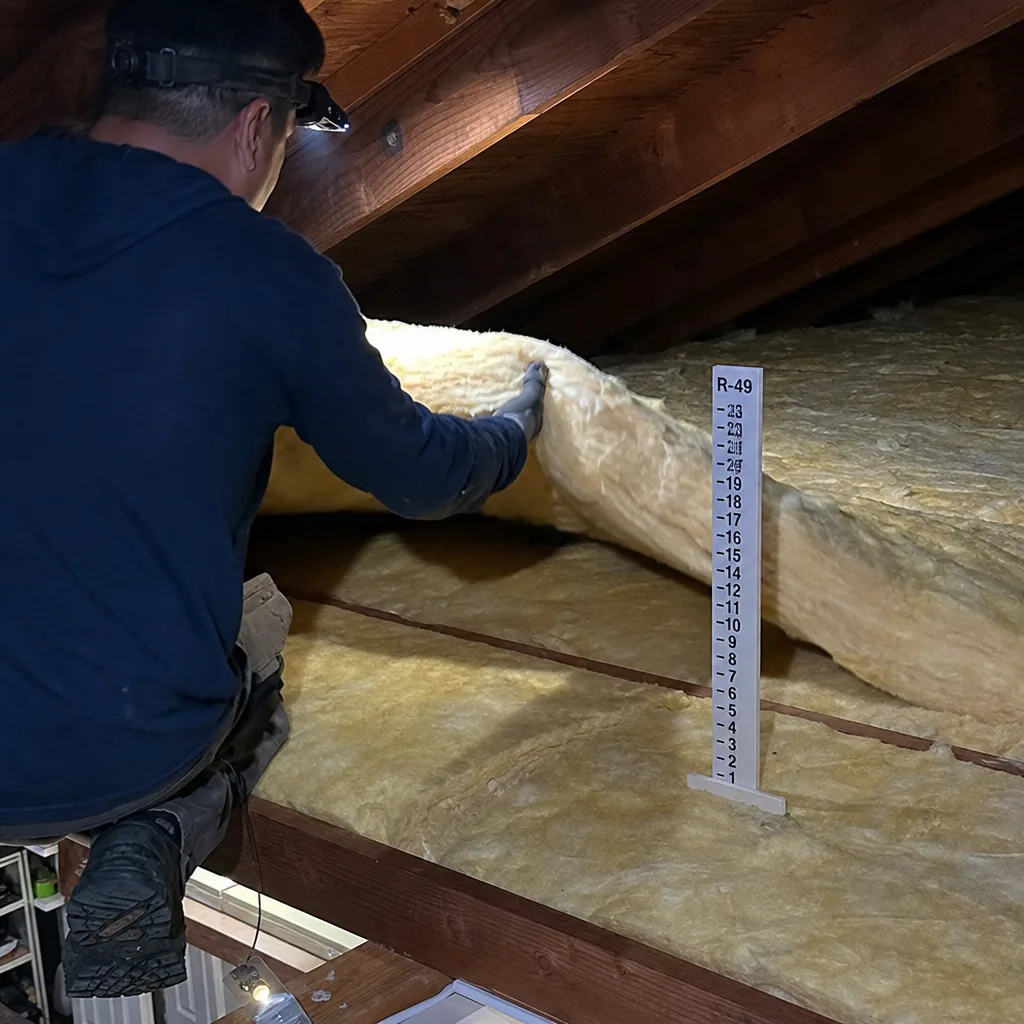
The C-2 classification authorizes a contractor to install, maintain, and repair warm-air heating, ventilating, and air-conditioning systems - which the CSLB interprets to include the insulation of ducts, pipes, and structural cavities associated with those systems. It does not, by itself, certify any diagnostic capability.
This distinction matters enormously. A C-2 license permits a contractor to blow cellulose into your attic. It does not require them to know how to run a blower-door test, interpret infrared imagery, or calculate the effective leakage area of your building envelope. Those are separate competencies - learned through building science training, not through the CSLB exam.
What this means for Buena Park homeowners: the license verifies that the contractor met California’s baseline requirements for HVAC-related work. It does not verify that they understand pressure boundaries, stack effect, or why air sealing must precede insulation installation. That expertise must be assessed separately, which is why the interview questions in the next section exist.
We’ve been called to homes in the Buena Park Hills area where a previous contractor had packed R-38 batts over unsealed top plates and can-light penetrations. The insulation looked full. The energy bills looked unchanged. The C-2 license on the truck had nothing to say about the diagnostic failure that preceded the installation.
The 5-Question Interview Script
Use these questions in your initial phone call or site visit. The answers below represent what a qualified contractor should say. Red-flag responses are noted.
Question 1: “What is your air-sealing procedure before installing insulation?”
Qualified answer: “We seal all top plates, electrical and plumbing penetrations, can lights, and chimney chases with fire-rated caulk or foam before any insulation goes in. We verify the seal with a blower-door test.”
Red flag: “We can add air sealing if you want, but most homes don’t need it” or “The insulation itself will stop the air leaks.”
Insulation does not stop air leaks. Fiberglass and cellulose are air-permeable materials. They slow heat transfer; they do not block airflow. A contractor who treats air sealing as optional is preparing to install material that will perform well below its rated R-value.
Question 2: “Will you provide blower-door numbers before and after the work?”
Qualified answer: “Yes. We test at the start to establish a baseline, then test after air sealing and again after insulation to document the improvement. You get the report.”
Red flag: “We don’t usually do that” or “You can feel the difference when we’re done.”
Feelings are not data. A blower-door test - a pressurization reading that shows, in one number, how much air your building envelope is losing - provides an objective measurement of performance change. In our work across Buena Park, we’ve seen homes drop from 3,800 CFM50 to 1,900 CFM50 after proper air sealing. That number belongs in your records, not in our memory.
Question 3: “What brand and type of material will you install, and what is the final installed R-value?”
Qualified answer: “We’re installing Knauf EcoFill blown cellulose to an installed density of [X] pounds per square foot, achieving R-38 across the attic floor. Here’s the manufacturer spec sheet.”
Red flag: “We use the good stuff” or “It’ll be R-38, don’t worry about the brand.”
Specificity protects you. Generic claims allow substitution with inferior products. The written scope should name the manufacturer - whether Knauf, Rockwool, CertainTeed, or another - and specify the product line, not just the category.
Question 4: “What is your pricing structure - labor, materials, and any variables?”
Qualified answer: “Here’s a flat price for the complete scope: air sealing, insulation, cleanup, and documentation. The only variable is if we find active rodent damage requiring remediation before we can safely install.”
Red flag: “It’s $1.50 per square foot” with no mention of air sealing, or a quote that separates materials and labor in a way that allows either to balloon.
Per-square-foot pricing without a defined scope is a common tactic to low-ball the initial bid, then add necessary work later at premium rates. Under Haven Standard Clause 1, every job begins with a written price before any work starts - flat, complete, and binding.
Question 5: “What documentation do I receive when the job is finished?”
Qualified answer: “You’ll have three things: a final invoice matching the written scope, a photo record of the completed work, and blower-door test results if air sealing was performed.”
Red flag: “We’ll email you a receipt” or “The inspector signs off, that’s your documentation.”
Municipal inspection verifies code minimums, not performance. Your documentation is what protects your investment at resale, supports warranty claims, and allows future contractors to understand what was done without destructive investigation.
What a Written Scope of Work Must Contain
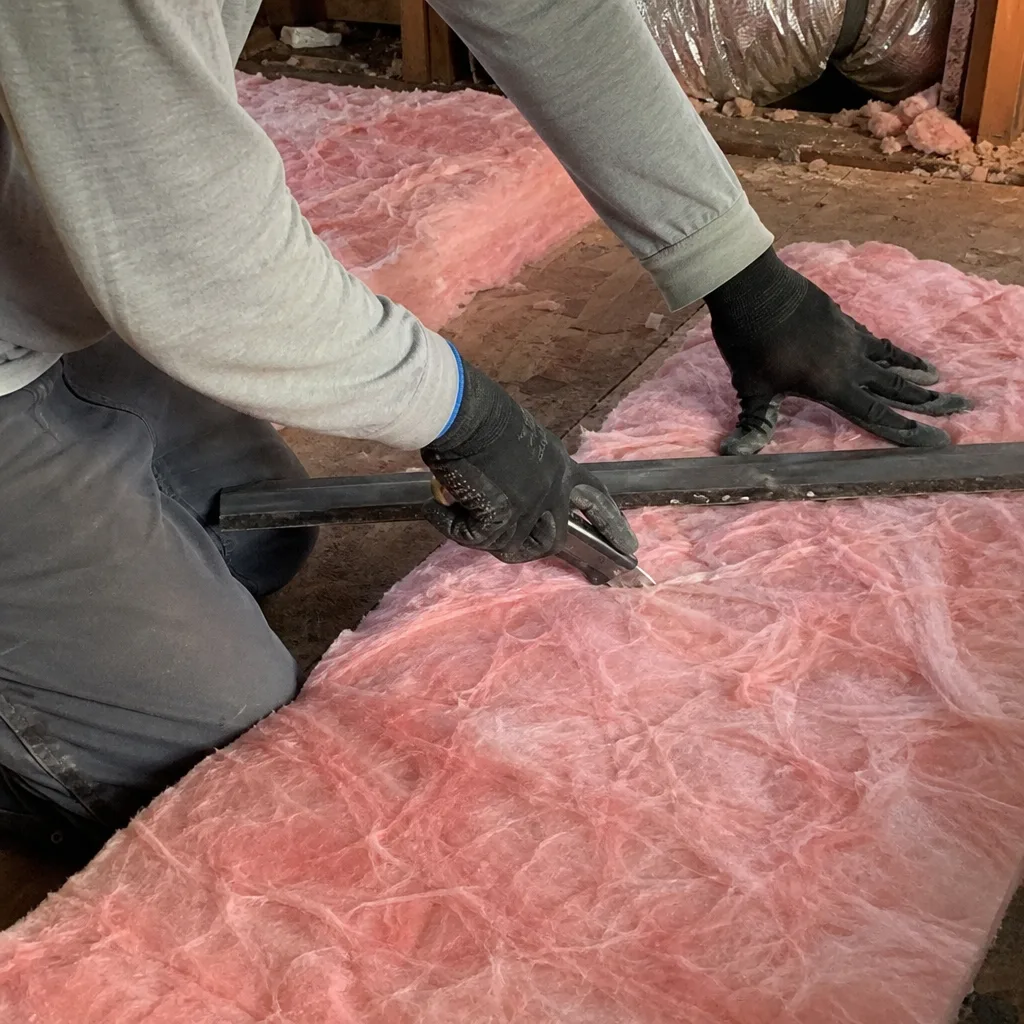
The written scope is your only enforceable record of what was promised. A verbal estimate, a text message, or a napkin sketch will not stand up if the work goes wrong. In Buena Park, where many homes were built between 1955 and 1985 with minimal original air sealing, the scope must explicitly address the condition of the building envelope before adding insulation.
Every written scope should include these elements:
- Linear feet of air sealing - Specify where: top plates, electrical penetrations, plumbing stacks, chimney chases, duct boots, can lights. “Air sealing as needed” is not acceptable; “seal 847 linear feet of top plate and 23 fixture penetrations” is.
- Final installed R-value - Not the bag rating, the installed performance. R-38 batts compressed to R-30 by a deck repair are a scope failure.
- Brand and type of material - “Owens Corning ProPink L77 loose-fill fiberglass” or “Icynene Classic Max open-cell spray foam at 3.5 inches.” Product line, not just manufacturer.
- Blower-door procedure - If air sealing is in scope, the test protocol must be specified: pre-work baseline, post-sealing verification, and post-insulation final. The target improvement should be stated, even if qualified (“target 30% reduction in CFM50; actual results depend on structural conditions”).
- Exclusions and assumptions - “Scope assumes attic is free of active rodent infestation” or “Deck repair beyond 10 square feet is excluded and will be quoted separately if discovered.”
- Warranty terms - Duration, what is covered, and the process for making a claim. Under our 365-Day Done Right Promise, if it’s not done right, we make it right - and that promise is in writing before anyone lifts a tool.
In Buena Park’s climate zone 10, where cooling dominates energy costs, the scope should also address whether a radiant barrier is recommended and how it integrates with the insulation system. A radiant barrier stapled to the rafters over poorly sealed attic floor insulation creates a secondary air channel that can actually increase cooling load. The scope should specify placement and sealing details.
How to Read an Insulation Quote
Quotes vary in format, but the structure reveals intent. Here’s how to read one critically.
Materials-Only Line Items
A quote that lists “R-38 fiberglass batts: $1,200” without labor, without air sealing, and without equipment is incomplete. It is either a materials-supply-only bid or a deliberate low-ball that will grow through change orders. In either case, it is not a reliable basis for comparison.
A complete quote for attic insulation in a typical 1,600-square-foot Buena Park home built in the 1970s should include:
- Air sealing labor and materials (typically 15-25% of total job cost in our market)
- Insulation material and installation
- Protective floor covering, lighting, and ventilation for the work zone
- Cleanup and disposal
- Documentation (photo record, blower-door testing if applicable)
The Suspiciously Low Number
If one quote is 40% below the others, the most common cause is omitted air sealing. In Buena Park, we’ve reviewed competitor quotes - and broken down realistic pricing in our Insulation Cost Breakdown: The Buena Park Homeowner’s Reference for 2026 - where “attic insulation” at $1,800 carried no air-sealing line item at all. The homeowner would receive a full attic of new material over the same leaky ceiling they started with.
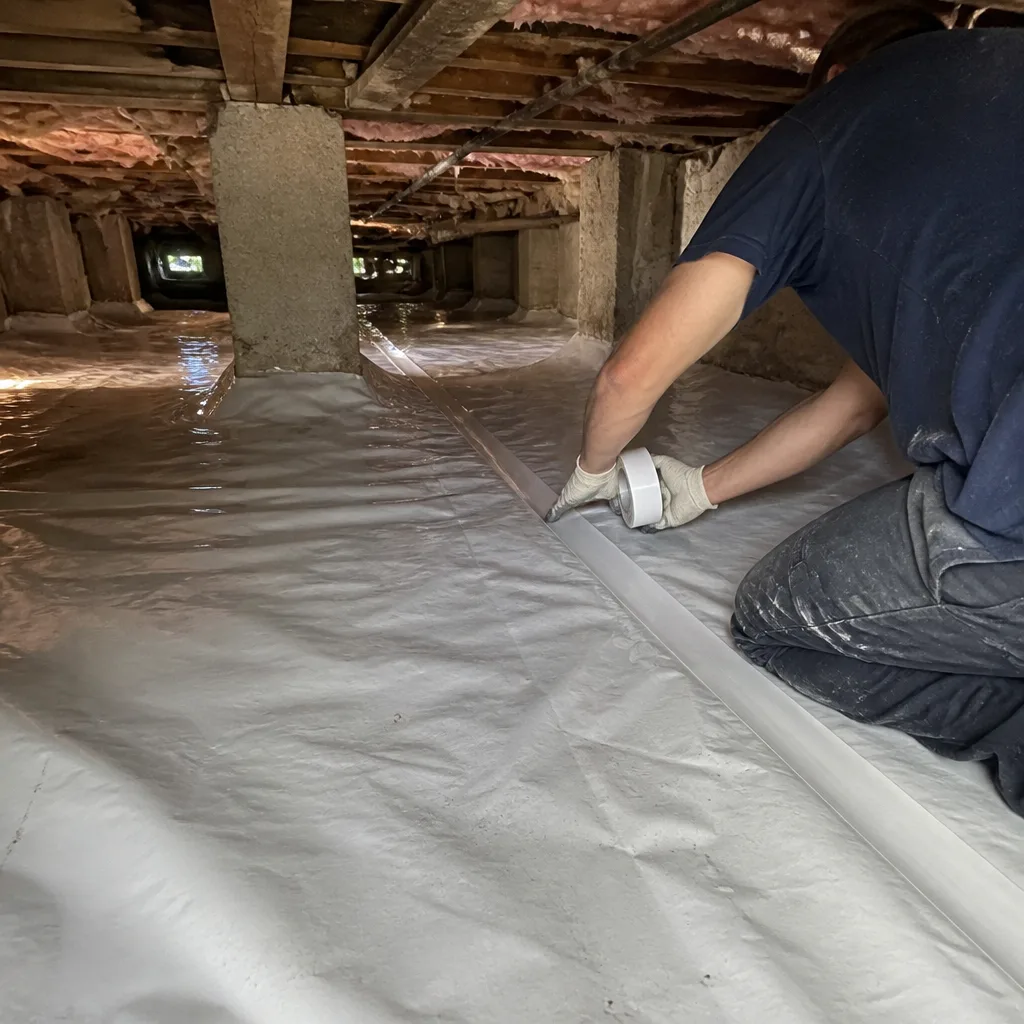
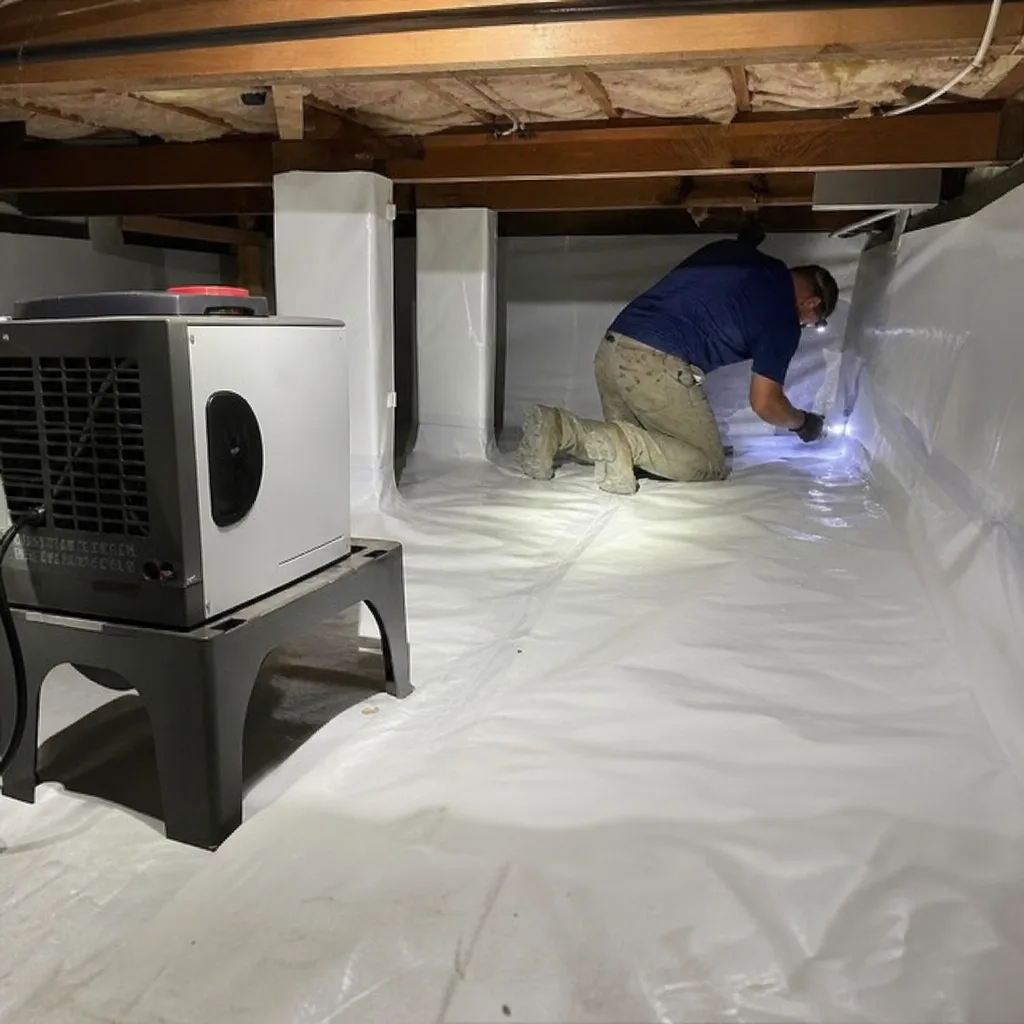
Another common omission is the vapor barrier or conditioned-space separation in crawl space encapsulation work. A quote for “crawl insulation” at $900 that does not specify vapor barrier grade, seam sealing, and dehumidification sizing is not comparable to a complete encapsulation scope.
Flat Price vs. Time-and-Materials
Time-and-materials quotes shift risk to the homeowner. Flat pricing with a defined scope shifts risk to the contractor. Under Haven Standard Clause 1, we provide a flat, written price before any work starts - always. If a contractor will not commit to a flat price, ask why. The answer usually reveals uncertainty about the scope or an intention to expand it later.
For more guides & resources, we also offer a Free Second Opinion on any written estimate. Bring us a competing quote and we will read it with you, line by line, to identify what is included, what is omitted, and what questions remain unanswered.
Buena Park Climate and Building Code Considerations
Buena Park sits in California climate zone 10, characterized by warm, dry summers and mild winters with minimal freezing. This shapes both the technical approach and the economic return of insulation work.
Cooling-dominated loads mean attic insulation and air sealing produce their greatest savings in summer months, when attic temperatures in Buena Park regularly exceed 140°F. A well-sealed attic floor with adequate R-value reduces the temperature differential across the ceiling, which directly reduces air conditioning runtime. The payback calculation differs from heating-dominated climates: every CFM50 of air leakage you eliminate is warm air you don’t pay to cool and replace.
Local building code - detailed in our Insulation Permits, Codes & Inspections in CA: What You Need to Know - requires permit and inspection for insulation work that involves removal of existing material or alteration of the thermal envelope in structures built before Title 24 energy standards. In Buena Park, this typically applies to homes built before 1978. The permit process includes a pre-inspection of the work area and a final inspection verifying installed R-value and, where applicable, fire-blocking at penetrations.
Neighborhood-specific considerations we’ve encountered:
- Buena Park Hills and adjacent elevated areas: Greater diurnal temperature swings and higher wind exposure increase the importance of wind-washing barriers at eaves and proper baffle installation.
- Central Buena Park (post-war tract homes): Original knob-and-tube wiring often remains active in attics; insulation contact requires electrical evaluation and often rewiring before work can proceed safely.
- Near Beach Boulevard corridor: Higher humidity influence from coastal proximity makes vapor barrier strategy more critical in crawl spaces than in fully inland Orange County locations.
These factors should appear in a contractor’s site assessment and be reflected in the written scope. A quote that treats every Buena Park home identically has not performed adequate diagnostics.
The Three Documents You Need at Job Completion
When the crew leaves, you should hold three documents. Each serves a distinct purpose for resale, permit closeout, and future contractor continuity.
Document 1: Final Invoice Matching the Written Scope
This is your financial record and warranty trigger. The invoice should reference the original scope by date or job number, list the same line items, and show no unexplained additions. If the scope included “seal 847 linear feet of top plate,” the invoice should not reduce that to “air sealing” without specificity. Discrepancies between scope and invoice are common sources of warranty disputes.
Document 2: Photo Record of Completed Work
Every job we complete includes a Documented Photo Record - not available on request, but delivered automatically. These photos show the attic before work, during critical phases (air sealing in progress, insulation depth markers), and after completion. For spray foam jobs, they document full lift thickness and coverage uniformity. For spray foam insulation in Buena Park, this documentation is particularly valuable because the material obscures its own installation quality once cured.
For resale purposes, a photo record allows a home inspector to verify that work was performed to professional standard without entering a confined attic space. For warranty claims, it establishes the condition of the installation at completion. For future contractors, it prevents redundant work and destructive investigation.
Document 3: Blower-Door Test Results (If Air Sealing Was Performed)
This is your performance verification. The report should show:
- Pre-work CFM50 and equivalent leakage area
- Post-air-sealing CFM50 and percentage improvement
- Post-insulation CFM50 (if tested)
- Test date, technician name, and equipment calibration date
In Buena Park, we’ve provided blower-door reports that homeowners later used to qualify for utility rebate programs, support energy-efficient mortgage refinancing, and document improvement for property tax reassessment under California’s energy efficiency provisions. The document has value beyond the immediate job.
Without these three documents, you have a receipt for money spent and no evidence of performance gained. That asymmetry is what the Haven Standard was designed to eliminate.
Common Mistakes to Avoid
- Hiring based on price per square foot alone. A lower price with omitted air sealing produces a higher lifetime cost through continued energy waste. In Buena Park’s cooling-dominated climate, leaky attic floors are particularly expensive.
- Accepting “R-value” without specifying installed performance. Bag-rated R-38 and installed R-38 are different numbers. Compression, gaps, and thermal bridging reduce effective performance by 20-30% in typical installations.
- Neglecting to verify active license status before payment. The CSLB lookup is free and takes two minutes. Contractors with suspended licenses have collected deposits and disappeared; this is preventable.
- Allowing insulation over unsealed can lights. In older Buena Park homes, recessed fixtures are often non-IC rated and create both fire hazards and major air leakage paths. Sealing or replacing these fixtures must precede insulation.
- Failing to get warranty terms in writing. Verbal promises of “we’ll take care of it” expire when the crew leaves. The 365-Day Done Right Promise exists in writing because verbal assurances are unenforceable.
- Skipping the post-work walkthrough. You should see the completed space, or at minimum review the photo record, before final payment. Contractors who rush to invoice before documentation is delivered are prioritizing cash flow over accountability.
- Assuming all insulation contractors understand building science. The C-2 license does not require it. Diagnostic capability must be verified separately through the interview process and reference checks.
When to Call a Professional
Call a qualified insulation contractor when your energy bills trend upward without rate increases, when rooms show persistent temperature stratification, when attic inspection reveals compressed or displaced material, or when you’re completing any roof or HVAC work that exposes the thermal envelope. In Buena Park, many homeowners discover insulation issues during solar panel installation, when attic access is already established.
If you’ve received a quote that seems incomplete, or if you’re comparing multiple bids and cannot reconcile the price differences, bring them to us. Topside Attic Insulation Buena Park offers free estimates in Buena Park - call (562) 418-5767 - and we provide a Free Second Opinion on any written estimate from another contractor. We’ll read it with you and identify what questions remain unasked.
Frequently Asked Questions
Most complete attic insulation jobs in Buena Park, including air sealing and blown-in material to R-38, run between $2,800 and $5,400 for a typical 1,400-2,000 square foot home built between 1955 and 1985. The variable is almost always the extent of air sealing required, not the insulation material itself. Homes with original knob-and-tube wiring or active rodent damage fall outside this range until those conditions are addressed. Call (562) 418-5767 for a written price specific to your home - estimates are free.
Replacement is usually more cost-effective than repair when existing insulation is compressed below 50% of original thickness, contaminated by rodent activity, or water-damaged. In Buena Park’s climate, fiberglass batts installed before 1990 are often compressed to R-11 equivalent or less. Adding new material over old without addressing compression and air sealing produces poor results. We assess this during our site evaluation and document the condition with photos before recommending a course.
Air sealing and blown-in insulation can often be completed in a single day for attics under 2,500 square feet with clear access. Same-day service depends on the condition of the space - homes requiring electrical remediation, extensive deck repair, or hazardous material removal need scheduling beyond the initial visit. We do not rush scope to fit a schedule. Call (562) 418-5767 to discuss your timeline and we’ll be direct about what same-day completion requires.
A blower-door test is a pressurization reading that shows, in one number, how much air your building envelope is losing. A powerful fan mounts in an exterior door frame, depressurizes the house, and measures the airflow required to maintain that pressure difference. The result, in CFM50 (cubic feet per minute at 50 Pascals), quantifies total leakage. Without this number, you cannot verify that air sealing work actually changed anything. We provide before-and-after blower-door readings on every applicable job so homeowners can see the performance change they paid for.
Permit requirements depend on the scope and the age of the home. In Buena Park, permits are generally required for insulation removal and replacement in structures built before current Title 24 standards, and for any work involving spray foam or structural modification. A qualified contractor handles permit application and scheduling as part of the job. If a contractor suggests skipping the permit to save money or time, that is a significant red flag - unpermitted work can complicate resale and insurance claims.
Demand documentation. Visual inspection of a finished attic is difficult - the sealing occurs at joints and penetrations that are often buried under insulation. The blower-door test provides objective verification: a meaningful reduction in CFM50 confirms that leaks were found and sealed. Without testing, you are relying on trust alone. Under the Haven Standard, we deliver the numbers, not the expectation of trust.
The Bottom Line
The right hiring question for an insulation contractor in Buena Park is not “how much per square foot” - it is “what are your pre-install blower-door numbers and will you put them in writing.” That single question filters out every contractor who treats air sealing as optional, every quote that omits performance verification, and every job that ends with a receipt instead of a documented result. Verify the CSLB license, conduct the five-question interview, demand a written scope with specific quantities and materials, and hold three documents at completion: the matched invoice, the photo record, and the blower-door report. Anything less leaves you paying for a promise that was never measured.
Written by Wes Okafor, Owner at Topside Attic Insulation Buena Park, serving Buena Park since 2016.