
Last updated September 23, 2026
The Complete Guide to Insulation in Buena Park
A house in Buena Park can have R-38 in the attic and still lose 30% of its conditioned air through bypasses that batting cannot stop. Insulation slows conduction, not airflow, and in Orange County’s climate zone 8, that distinction costs homeowners hundreds of dollars per summer. In this guide, we’ll walk through the actual sequence that works in Buena Park tract homes: blower-door diagnostic first, air sealing second, insulation third. You’ll learn why reversing steps two and three wastes material and money, what documentation to demand after any job, and how California’s Title 24 code applies to your specific home.
Quick Answer
Proper insulation in Buena Park means sealing air leaks before adding material, targeting attic floor, cantilevers, and recessed-light penetrations in that order. Most complete retrofits in Buena Park run $3,800-$7,200 for attic work including air sealing and blown-in insulation to current Title 24 standards, with spray foam in conditioned attics ranging higher; see our Insulation Cost Breakdown: The Buena Park Homeowner’s Reference for 2026 for a detailed breakdown.
Table of Contents
- Conductive vs. Convective Heat Loss in a Buena Park Attic
- The Sequence That Actually Works: Diagnostic, Seal, Insulate
- The Three Envelope Zones in Southern California Tract Homes
- Materials and Methods: What Works in Buena Park’s Climate
- Title 24 Compliance: California’s Minimum R-Values for Your Zone
- The Documentation You Should Hold After Any Job
- Costs, Timeline, and What Disrupts Both
- Maintenance and Realistic Longevity
Conductive vs. Convective Heat Loss in a Buena Park Attic
On a July afternoon in Buena Park, an unshaded attic hits 140°F. Most homeowners assume the heat pressing down through their ceiling is the problem R-value solves. It is, partially. But it’s not the whole story.
Conduction is heat moving through solid materials: drywall, lumber, the insulation itself. R-value measures resistance to conduction. A bag of R-38 fiberglass batting slows conduction well enough. Convection is heat carried by air movement: hot attic air slipping through gaps around light fixtures, top plates, duct chases, and electrical penetrations. No R-value on any bag stops convection. A batt laid over a gap still lets air through.
We’ve tested this in Buena Park homes near the Mall of Orange and in the older tracts off Beach Boulevard. A 1978 ranch with R-30 fiberglass batts and no air sealing often tests worse than a 1995 home with R-19 and sealed top plates. The blower-door test - a pressurization reading that shows, in one number, how much air your building envelope is losing - reveals the gap. We’ve seen 3,800 CFM50 drop to 2,100 after sealing alone, before adding a single inch of insulation.
The physics matter because Buena Park’s cooling load dominates. Your air conditioner runs harder against convective losses than conductive ones in summer, since every cubic foot of conditioned air that escapes is replaced by 140°F attic air your system must now cool. In winter, the reverse happens: heated air escapes to the attic, and cold air pulls in through lower leaks. Sealing first addresses both seasons.
Here’s what this means practically. If a contractor quotes insulation without mentioning air sealing, they’re addressing half the problem, as our DIY vs Professional Insulation: The Buena Park Homeowner’s Decision Guide explains. If they propose blowing cellulose over an unsealed attic floor, they’re burying leaks that will continue operating under the new material. And if they can’t show you a blower-door number, they can’t prove they found the leaks in the first place.
The Sequence That Actually Works: Diagnostic, Seal, Insulate
The correct sequence isn’t opinion. It’s observable, testable, and we’ve documented it across thousands of jobs. Reversing steps two and three is the single reason most retrofits underperform their rated specs.
Step 1: Blower-Door Diagnostic
We start every Buena Park job with a blower-door test. The fan mounts in an exterior door, depressurizes the house to -50 Pascals, and measures airflow in cubic feet per minute (CFM50). That single number tells us how leaky the envelope is. More importantly, it lets us walk the house with a smoke pencil or thermal camera and locate the actual leakage paths. Without this step, sealing is guesswork.
In Buena Park’s 1960s-1980s tracts, we consistently find the same pattern: top plates (the horizontal framing member where wall studs meet the ceiling) are unsealed; recessed can lights are unprotected; bathroom exhaust fans dump into the attic through flex duct with gaps at the penetration. A smoke pencil at any of these points shows obvious draw during the test.
Step 2: Air Sealing
Air sealing happens before insulation touches the attic. We seal top plates with fire-rated caulk or foam, box out can lights with sealed covers, tape duct connections, and seal around chimney chases, plumbing vents, and wire penetrations. Every gap gets addressed. This is not an upsell. Under the Haven Standard, we will not blow insulation over an unsealed attic floor.
The result shows in the numbers. We run a second blower-door test after sealing and before insulating. Homeowners get both readings. In our experience across Buena Park, a 35-45% reduction in CFM50 is typical from sealing alone.
Step 3: Insulation
Only after sealing do we add insulation. The material choice depends on the application, which we cover in the next section. But the critical point is this: insulation installed over a sealed floor performs to its rated R-value. Insulation installed over leaks performs below it, because moving air strips heat around and through the material.
We’ve removed insulation from Buena Park attics where homeowners paid for R-38 and got R-38 on paper but R-22 in practice due to wind washing - attic air moving through loose-fill material and reducing its effective performance. Sealing first prevents this.
The Three Envelope Zones in Southern California Tract Homes
Buena Park’s housing stock is dominated by postwar tracts with specific vulnerabilities. We focus on three zones that account for the majority of envelope failure in this market.
Zone 1: The Attic Floor
This is the largest surface area and the most common retrofit target. In a typical 1,400-square-foot Buena Park ranch, the attic floor spans nearly the full footprint. Problems we find:
- Original insulation compressed below its labeled R-value from decades of storage traffic and ductwork
- Recessed can lights installed without airtight IC-rated housings, creating direct paths to conditioned space
- HVAC flex duct resting on insulation, compressing it and creating thermal bypasses
- Attic access hatches uninsulated and unsealed
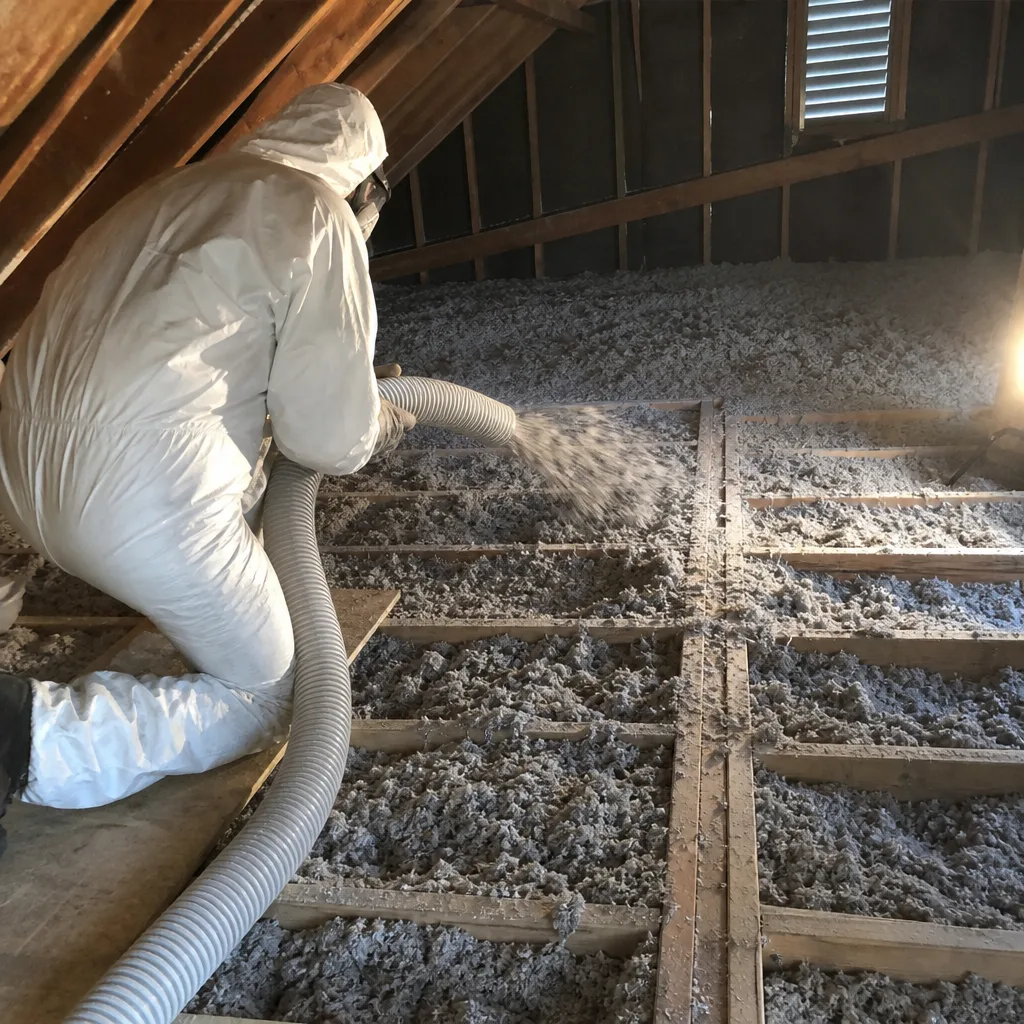
The fix is comprehensive: remove or work around old material, seal all penetrations, then install new insulation to full depth. We use Owens Corning or Johns Manville blown-in fiberglass for most attic floors in Buena Park, or Knauf loose-fill cellulose where homeowners prefer it. Both perform to spec when installed over sealed decking.
Zone 2: Cantilevers Over Garages
Many Buena Park homes have second-floor rooms that extend over the garage on cantilevered floor joists. The underside is often open to the garage, with nothing but a layer of drywall and minimal insulation between the room and unconditioned space. In summer, the garage hits 110°F. The floor above becomes the hottest room in the house.
These are difficult to access and often missed in standard attic work. We address them from below when possible, or from the garage side, installing rigid foam or spray foam to create a continuous thermal boundary. This is not a standard insulation job; it requires air sealing at the rim joist and proper detailing at the garage-to-house wall connection.
Zone 3: Recessed-Light Penetrations
California’s Title 24 has required airtight recessed housings in new construction for years, but retrofits are different. Many Buena Park homes have original non-IC cans or early IC-rated units that still leak. A single unsealed can light leaks as much air as a 6-inch square hole in your ceiling. A kitchen with six cans has the equivalent of a 1-square-foot open window to the attic.
We box these out with sealed covers rated for contact with insulation, or replace the housings entirely where the fixture is outdated. This is air sealing work, not insulation work, which is why it belongs in step two of the sequence.
Materials and Methods: What Works in Buena Park’s Climate
Buena Park sits in California climate zone 8: hot, dry summers, mild winters, minimal annual precipitation. The insulation market offers more products than most homeowners need. Here’s what we actually install, where, and why.
Blown-In Fiberglass
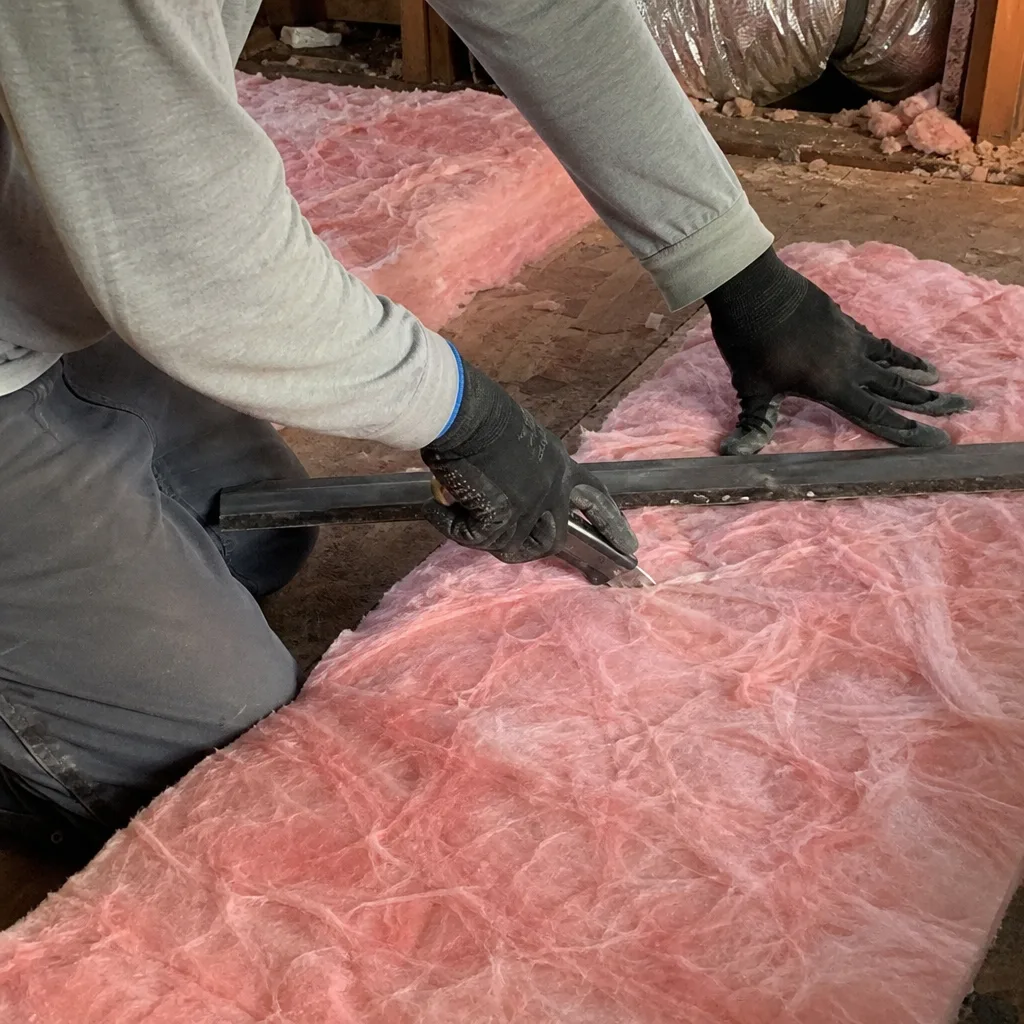
Our standard for vented attics in Buena Park. We source from Owens Corning or Johns Manville. Blown-in fiberglass fills irregular joist bays completely, doesn’t settle significantly when installed to proper density, and doesn’t support mold growth in the rare event of roof leakage. For attic floors, we specify blown-in over batts every time; batts leave gaps at joists and obstructions that blown material closes.
Loose-Fill Cellulose
Knauf cellulose is our alternative for homeowners who prefer recycled content. Treated with borate for fire and pest resistance, it performs similarly to fiberglass when installed to equivalent R-value. In Buena Park’s dry climate, moisture concerns are minimal. We do not install cellulose below grade or in contact with roof decking.
Spray Foam (Open-Cell and Closed-Cell)
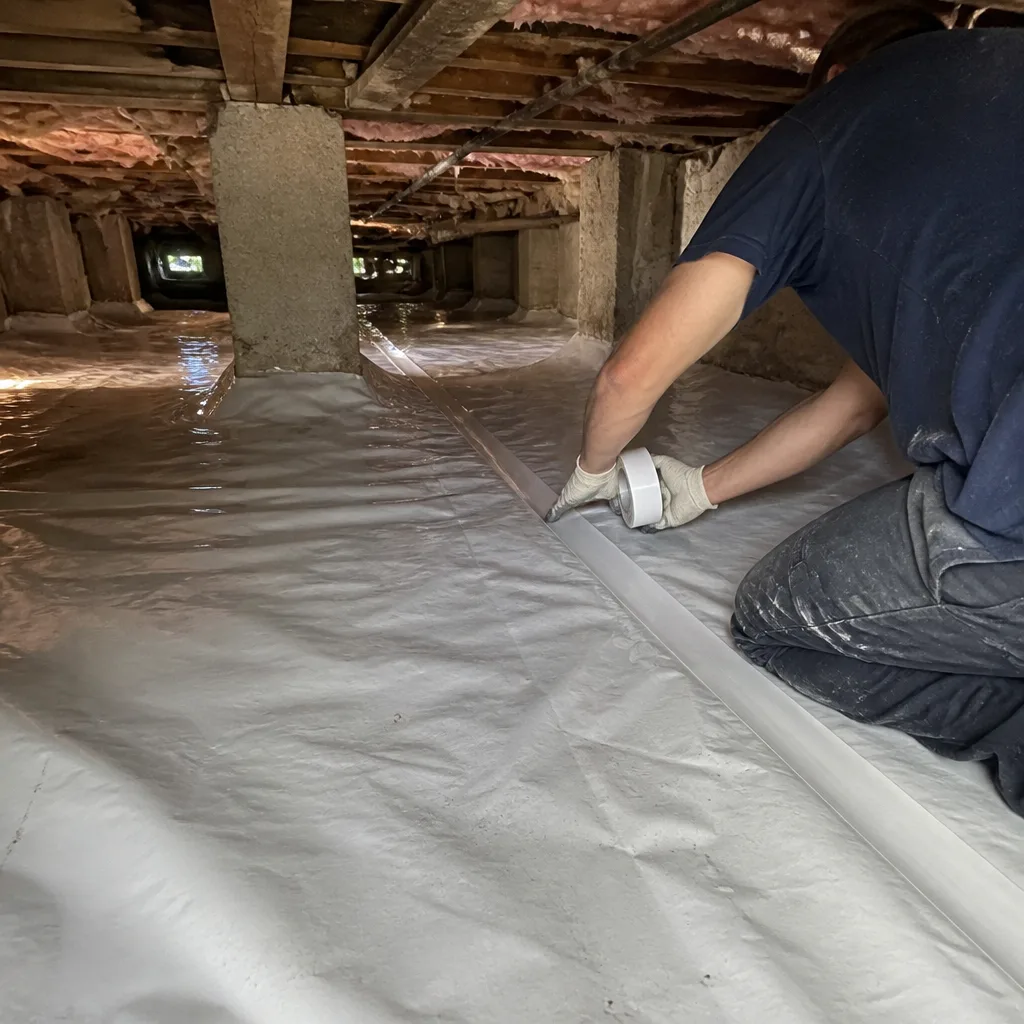
Spray foam insulation in Buena Park serves two distinct applications. Open-cell foam, at roughly R-3.6 per inch, works in conditioned attics where the foam is applied directly to roof decking and the attic becomes part of the conditioned envelope. Closed-cell, at R-6.5 per inch and vapor-impermeable, serves crawl space walls, rim joists, and cantilever floors where moisture control and high R-value in limited thickness matter.
We do not spray foam over unsealed substrates. The substrate must be clean, dry, and structurally sound. In Buena Park, we see failed foam jobs where contractors sprayed over dirty decking or skipped air sealing at the eaves. The foam adheres poorly and traps moisture against wood. Proper prep is non-negotiable.
Radiant Barriers
Radiant barrier foil or paint applied to roof decking reduces radiant heat transfer from the roof surface to the attic space. In Buena Park’s 140°F summer attics, this can reduce attic air temperature by 20-30°F. It’s not a substitute for insulation; it’s a complement. We install radiant barriers in homes with adequate insulation but ongoing summer comfort complaints, particularly in south- and west-facing roofs with dark shingles.
What We Don’t Install
We do not install denim insulation, cotton batts, or proprietary “green” products with unverified long-term performance. We also do not install insulation without air sealing first. The Haven Standard requires it.
Title 24 Compliance: California’s Minimum R-Values for Your Zone
California’s Title 24 Building Energy Efficiency Standards set minimum insulation levels by climate zone. Buena Park is zone 8. Here’s what the code requires for residential retrofits and new construction, as of the current standards cycle:
| Application | Minimum R-Value (Zone 8) | Notes |
|---|---|---|
| Attic, vented (ceiling insulation) | R-38 | Can be R-30 if space-constrained; must meet U-factor equivalent |
| Attic, conditioned (roof deck insulation) | R-19 continuous or R-30 cavity | Spray foam typical; no compression gaps |
| Wood-framed wall | R-13 cavity + R-5 continuous, or R-15 cavity + R-3.8 continuous | Rarely achievable in retrofit without major demolition |
| Floor over unconditioned space | R-19 | Applies to cantilevers over garages, crawl spaces |
| Crawl space wall | R-19 | When crawl space is conditioned or semi-conditioned |
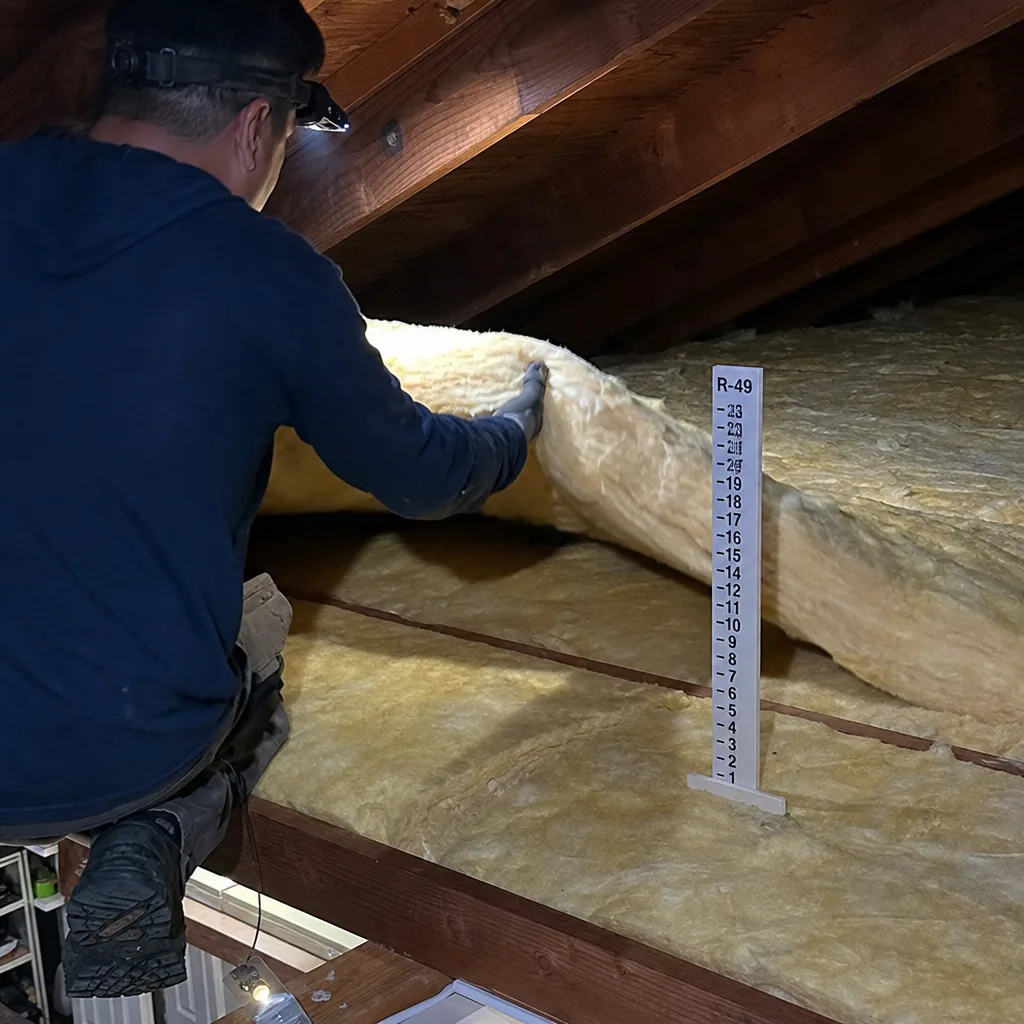
These are minimums, not recommendations. A Buena Park home insulated to R-38 in the attic meets code but may not deliver comfort if air sealing is poor. We typically specify R-38 to R-49 for attic floors, depending on joist depth and homeowner goals. Attic insulation in Buena Park jobs we complete include the R-value in the written scope and on the documentation you receive.
Permits are required for insulation work that involves alteration of the building envelope in Buena Park, a topic covered in our How to Hire a Insulation Contractor in Buena Park: A Step-by-Step Guide. We handle permit submission as part of our standard process. The permit ensures inspection and code compliance; it’s not optional, and any contractor who suggests skipping it is exposing you to liability.
The Documentation You Should Hold After Any Job
Under the Haven Standard, every job closes with documentation. Not a handshake and a promise. Physical, reviewable records. Here’s what you should receive after a complete insulation and air-sealing job in Buena Park:
- Pre- and post-blower-door readings in ACH50. CFM50 is the raw number; ACH50 (air changes per hour at -50 Pascals) normalizes it by house volume so you can compare to standards. A typical 1970s Buena Park home starts at 12-18 ACH50. After proper sealing, 5-7 ACH50 is achievable. We publish both numbers on every applicable job.
- Thermal photos of key leakage points before and after. These show, in color, where heat was moving through the envelope. The before photos guide the work; the after photos prove it was done.
- Written scope of work with R-value certification. This specifies what was installed, where, to what depth, and what R-value was achieved. It’s your warranty document and your permit close-out record.
- Documented Photo Record of the completed work. Included on every job, not available on request. You get photos of the sealed attic floor, the installed insulation at proper depth, the covered can lights, and any specific conditions we found.
- Written warranty under the 365-Day Done Right Promise. If it’s not done right, we make it right. The warranty terms are in writing before anyone starts.
We’ve been called to Buena Park homes where previous contractors installed insulation and left nothing. No photos, no test numbers, no written scope. When comfort problems persisted, there was no baseline to diagnose from. Documentation is how you know what you paid for, and how you prove it if something fails.
Costs, Timeline, and What Disrupts Both
Most complete attic retrofits in Buena Park - blower-door test, air sealing, and blown-in insulation to R-38 - run between $3,800 and $7,200 for a single-story home between 1,200 and 2,000 square feet. Variables that move the price:
- Accessibility: steep roof pitches, limited attic clearance, or truss configurations that restrict worker movement add labor
- Existing insulation removal: homes with degraded, contaminated, or improperly installed old material require removal and disposal before sealing
- Can light count: each recessed light needs a sealed cover or replacement; a kitchen with ten cans is significantly more work than one with two
- Ductwork condition: disconnected or poorly sealed ducts in the attic must be addressed before insulation covers them
- Spray foam applications: conditioned attics or crawl spaces with closed-cell foam range $8,000-$15,000 depending on square footage and thickness
Timeline for a standard attic job is one to two days. Day one: diagnostic, prep, and air sealing. Day two: insulation installation, final blower-door test, and documentation. We do not rush sealing to finish in one day. The Haven Standard requires the sequence be completed, not compressed.
What disrupts timeline: roof leaks that must be repaired first, active rodent infestations requiring remediation before insulation goes in, and electrical code violations we discover in the attic. We document these and stop work until they’re resolved. Installing insulation over a leak or live wiring is not something we do.
Under Haven Standard Clause 1, you get a written price before any work starts. No surprises, no “we found more once we got up there” add-ons unless you approve a written change order. We also offer a Free Second Opinion on any written estimate: bring us a competing quote and we’ll review it with you, line by line.
Maintenance and Realistic Longevity
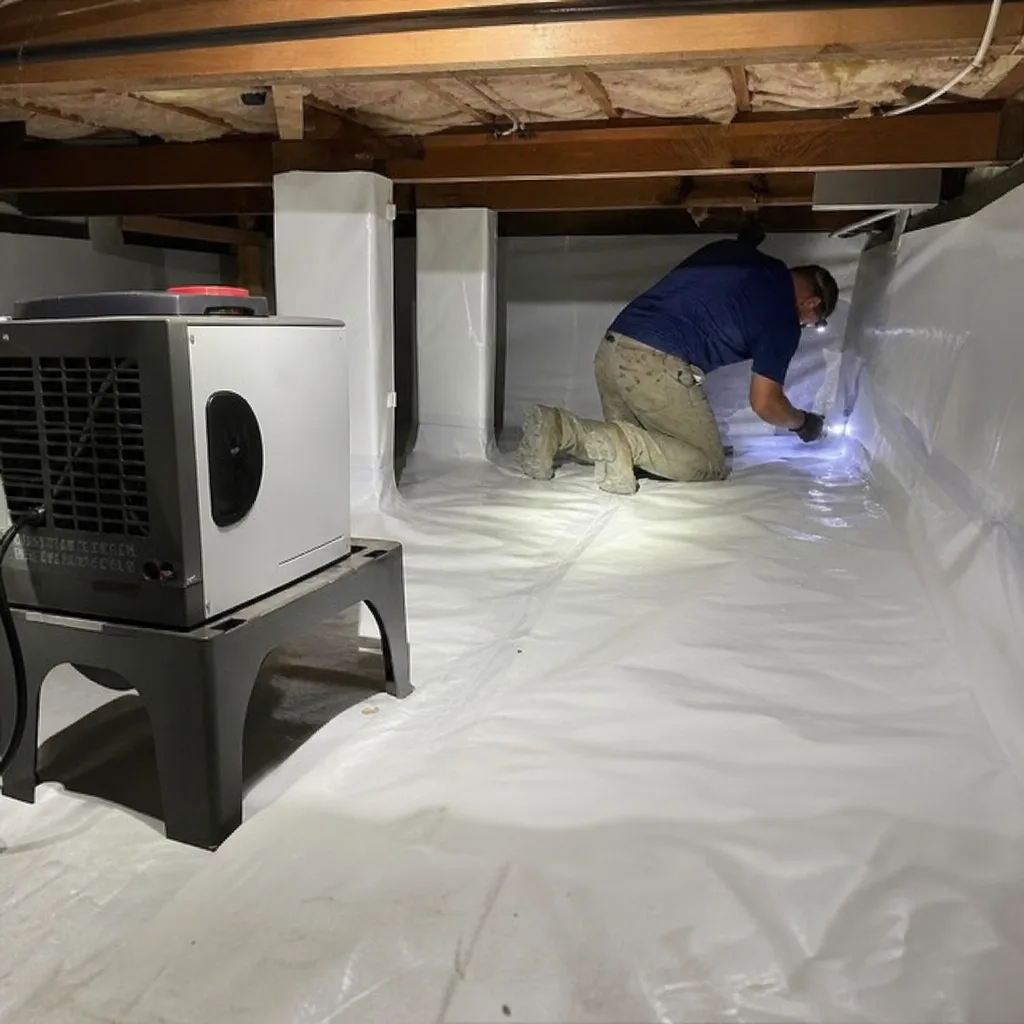
Properly installed insulation in Buena Park should last 20-30 years without degradation. But “properly installed” means sealed, dry, and undisturbed. Here’s what shortens lifespan and what maintenance looks like.
Moisture: Buena Park’s dry climate helps, but roof leaks, bathroom fan duct failures, and plumbing vents still introduce moisture. Wet insulation compresses, loses R-value, and can mold. We inspect for moisture signs during every job and require roof repair before insulating if we find active leaks.
Disturbance: Every time someone walks through the attic for HVAC service, cable installation, or storage, insulation compresses. Compressed fiberglass loses up to 50% of its R-value. We install walkways over insulation where attic access is needed regularly, and we recommend against using the attic for storage on top of insulation.
Settling: Blown-in fiberglass settles 1-2% over decades, negligible. Cellulose can settle 5-10% if installed below manufacturer’s specified density. We install to density, not just depth, and verify with depth markers across the attic.
Rodents: Squirrels and roof rats are active in Buena Park’s mature neighborhoods, particularly near the Ralph B. Clark Regional Park corridor and areas with heavy tree canopy. They nest in insulation, compress it, and contaminate it. We offer attic cleaning and rodent proofing as part of our service line, and we won’t install new insulation over contaminated old material.
Maintenance is minimal: inspect the attic every two years for leaks, check that bathroom fans vent properly, and avoid storage traffic. If your HVAC contractor needs attic access, ask them to use installed walkways or lay boards.
Common Mistakes to Avoid
- Insulating before air sealing. This is the most expensive mistake in retrofit work. You’re paying for R-value you won’t get, and you’ll pay again to remove or work around the insulation when the leaks are finally addressed.
- Ignoring can lights. In Buena Park’s 1980s and 1990s tracts, unsealed recessed lights are the single largest attic bypass. Covering them is air sealing work, not insulation work, and it must happen first.
- Installing insulation over old, wet, or contaminated material. This traps moisture and odors, violates manufacturer warranties, and creates health hazards. Removal and cleaning add cost, but skipping it adds more.
- Choosing R-value without considering assembly performance. R-38 batts perform below R-38 when compressed around ducts, bridged by joists, or wind-washed by attic air. Blown-in material, properly installed to full depth, outperforms higher-rated batts in most real assemblies.
- Skipping the blower-door test. Without a number, you don’t know if the sealing worked. Any contractor who can’t show you CFM50 before and after is asking you to trust process without proof.
- Using the wrong material for the application. Fiberglass in a crawl space floor absorbs moisture. Open-cell foam against a roof deck in an unvented attic without proper moisture analysis risks condensation. Material choice follows location and condition, not preference.
- Accepting verbal warranties. The Haven Standard requires written scope, written price, and written warranty before work starts. Verbal promises are not enforceable and not acceptable.
When to Call a Professional
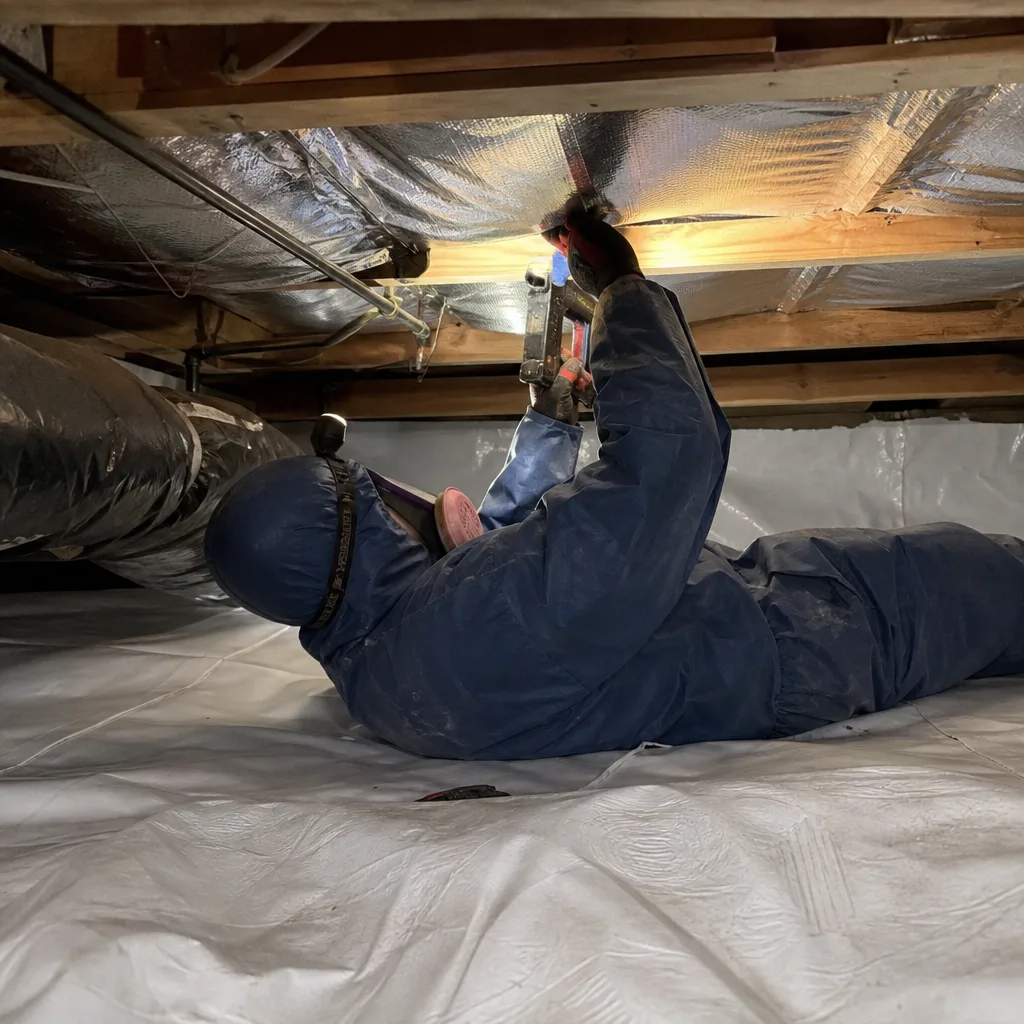
Call when your upstairs rooms stay hot past 10 p.m. in summer, when your energy bills spike without rate changes, when you find insulation scattered or compressed in the attic, or when you’re considering any HVAC upgrade. A new air conditioner sized for a leaky house is oversized and inefficient. Seal and insulate first; then right-size mechanical equipment.
Also call before any major renovation. In Buena Park, kitchen and bathroom remodels often involve ceiling work that exposes attic conditions. It’s cheaper to address envelope problems while the ceiling is open than to return later.
Topside Attic Insulation Buena Park offers free estimates in Buena Park. We bring a blower door to the estimate, run a diagnostic, and show you the actual leakage paths in your home. Call (562) 418-5767 to schedule. You’ll get a written price before any work starts, and if you have a competing quote, we’ll review it with you at no charge.
Frequently Asked Questions
Most complete attic retrofits in Buena Park run $3,800-$7,200 for a single-story home, including blower-door testing, air sealing, and blown-in insulation to R-38. Spray foam in conditioned attics or crawl spaces ranges higher, typically $8,000-$15,000. Call (562) 418-5767 for a written estimate specific to your home - estimates are free, and we provide a Free Second Opinion on any written quote you’ve already received.
California Title 24 requires R-38 minimum for vented attics in climate zone 8, which includes Buena Park. R-30 is acceptable only where space constraints prevent full R-38 depth. We typically specify R-38 to R-49 for attic floors, depending on joist depth and homeowner comfort goals. The R-value is certified in writing after installation.
Sometimes, but only if the old material is dry, uncontaminated, and uncompressed. In Buena Park homes with original 1970s or 1980s insulation, we usually find compression, dust loading, or rodent activity that makes removal the better choice. We inspect during the estimate and tell you exactly what we find. Installing new material over damaged old material traps problems and voids warranties.
A standard attic retrofit takes one to two days: diagnostic and air sealing on day one, insulation installation and final testing on day two. We do not compress the sequence to finish faster. Larger homes, spray foam applications, or jobs requiring insulation removal may extend to three days. You’ll get a written timeline with your price.
Insulation provides modest sound dampening, but it’s not soundproofing. Dense-pack cellulose or Rockwool batts in interior walls reduce airborne sound transmission better than attic insulation. If traffic noise is your primary concern, we can discuss targeted sound-control assemblies, but we won’t sell attic insulation as a noise solution. It’s the wrong tool for that job.
We publish before-and-after blower-door readings on every applicable job, in ACH50, so you can compare to building science standards. Some contractors skip the test entirely; others run it but don’t share results. Without a number, you can’t verify that sealing worked. Under the Haven Standard, you get the number in writing, every time.
Yes. Alteration of the building envelope, including insulation replacement or addition, requires a permit from the City of Buena Park. We handle permit submission and inspection scheduling as part of our standard process. Any contractor who suggests skipping permits is exposing you to code violations, insurance issues, and failed resale inspections. We don’t do it.
The Bottom Line
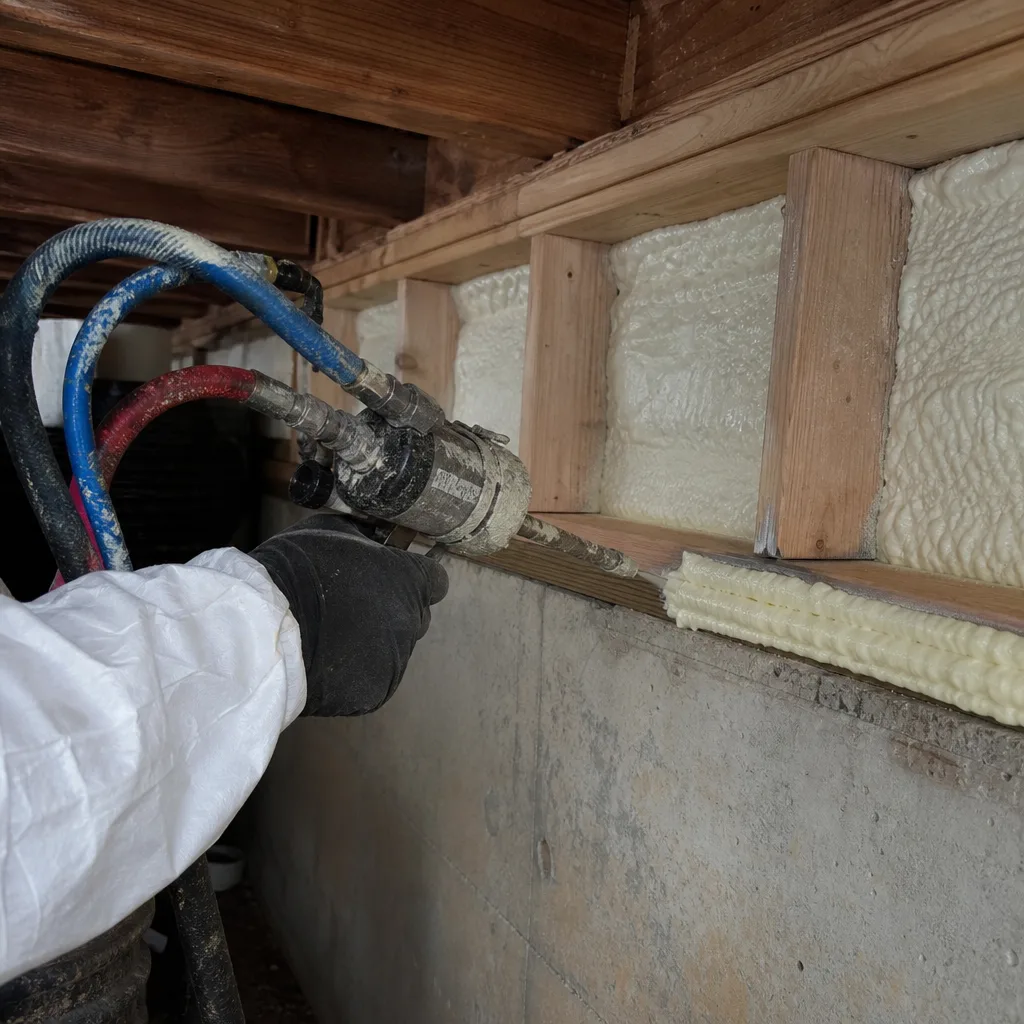
Insulation in Buena Park is not about buying the highest R-value bag. It’s about sequence: test, seal, then insulate. It’s about the three zones that actually leak in local tract homes: attic floor, cantilevers, and recessed lights. And it’s about documentation - blower-door numbers, thermal photos, and written certification - so you know what you paid for and can prove it later. Get the sequence wrong, and R-38 performs like R-20. Get it right, with air sealing first and proof after, and your home performs to the rating on the material. That’s the standard we work to, and it’s been our process since 2016.
Written by Wes Okafor, Owner at Topside Attic Insulation Buena Park, serving Buena Park since 2016.