
How Much Does Spray Foam Insulation Cost in Buena Park?
Spray foam insulation in Buena Park, CA typically runs between $1.50 and $4.50 per board foot, depending on whether you’re using open-cell or closed-cell foam and how much area needs coverage. Most Buena Park homeowners pay between $1,800 and $6,500 for a full attic or crawl space application, with the average project landing around $3,200 when air sealing is done first – which it should be, every time. Get a written price before any work begins; that’s not optional at Spray Foam Insulation in Buena Park, and it shouldn’t be optional anywhere else either.
Spray Foam Insulation Cost Breakdown (2026)
The table below reflects actual installed pricing in the Buena Park market for 2026 – labor, materials, and basic site prep included. These are not manufacturer estimates or national averages pulled from a trade publication. They reflect what Orange County homes actually cost to insulate, adjusted for the labor market here.
| Application Type | Foam Type | R-Value Range | Typical Installed Cost |
|---|---|---|---|
| Attic floor (1,200 sq ft) | Open-cell | R-19 to R-25 | $1,800 – $2,800 |
| Attic roof deck / rafters (1,200 sq ft) | Closed-cell | R-30 to R-38 | $3,400 – $5,800 |
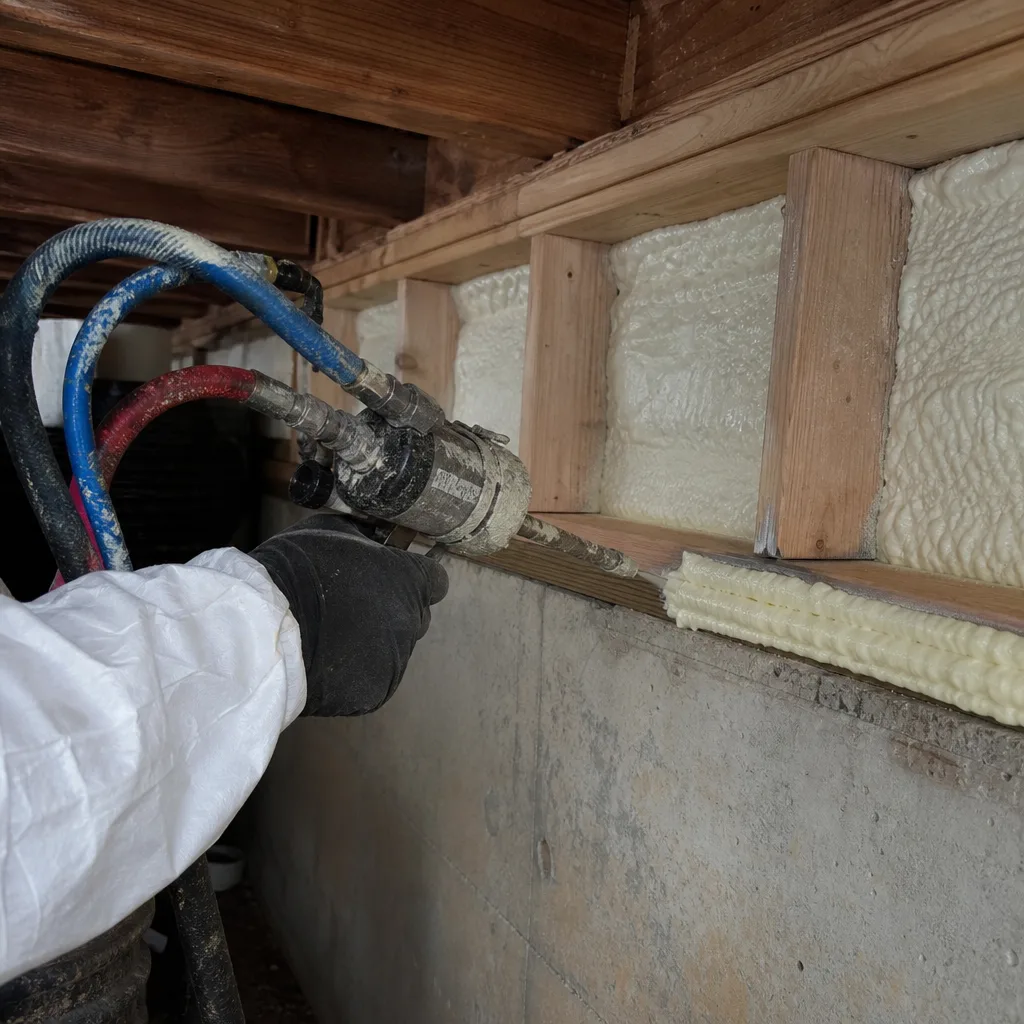
| Crawl space walls and rim joists | Closed-cell | R-13 to R-21 | $1,200 – $2,600 |
| Garage ceiling or bonus room floor | Open-cell or closed-cell | R-13 to R-30 | $900 – $2,200 |
| Exterior walls (new construction or gut renovation) | Closed-cell, 2-3 inch lift | R-13 to R-21 | $2,800 – $6,500 |
| Band/rim joist only (small job) | Closed-cell | R-13 to R-15 | $400 – $900 |
| Air sealing (top plates, can lights, penetrations) before foam | Two-component spray sealant | N/A – air barrier | $300 – $700 (included in full jobs) |
A word on that last line: air sealing the top plates, recessed can lights, and plumbing or electrical penetrations before laying any insulation is not a premium add-on. It’s the step that makes the insulation work. Open-cell foam at R-25 over an attic floor that’s still leaking around a dozen can lights performs closer to R-12 in practice, because conditioned air is bypassing the insulation entirely. In Buena Park homes built between 1960 and 1990 – which describes a large share of the housing stock in areas like Whitaker and the Belmont Street corridor – unsealed can lights and open top plates are nearly universal. We seal first, then insulate. That order matters.
Closed-cell foam costs more per board foot than open-cell, typically $1.50 to $2.00 more per board foot, because the blowing agent and chemistry are more expensive and the application requires tighter temperature controls. In Southern California’s climate, closed-cell is usually the right call for roof decks and exterior walls because it also acts as a vapor retarder – something open-cell does not do effectively at common thicknesses.
What Affects Spray Foam Insulation Pricing in Buena Park
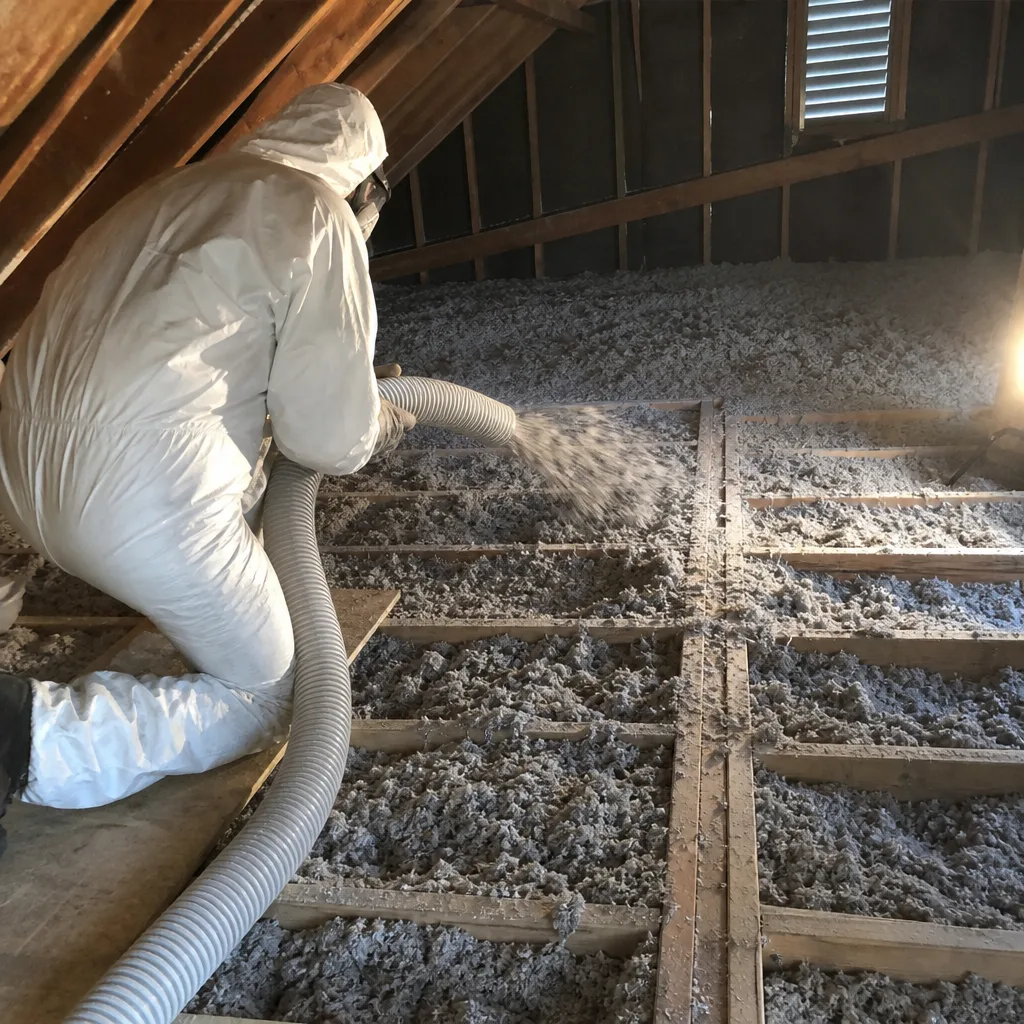
- Foam type – open-cell vs. closed-cell: Open-cell foam (also called half-pound foam) runs $0.44 to $0.65 per board foot for material alone. Closed-cell (two-pound foam) runs $1.00 to $1.50 per board foot before labor. For most Buena Park roof deck applications, closed-cell is specified because it meets California Title 24 vapor retarder requirements without additional materials.
- Square footage and access conditions: A straightforward 1,400-square-foot attic floor with good access from a pull-down stair is faster to insulate than the same square footage in a low-slope attic with a 16-inch clearance. Homes in the Knott and Dale corridor sometimes have older hip-roof designs with multiple dead spaces that require a technician to work in sections – that adds labor hours directly to your invoice.
- Existing insulation removal: If the attic already has degraded fiberglass batts or contaminated blown-in insulation – a common scenario in Buena Park homes that haven’t been touched since the 1980s – removal runs an additional $1.00 to $2.50 per square foot depending on depth and condition. Vermiculite or suspect material gets tested before we touch it, no exceptions.
- The state of the air barrier before foam goes in: A home with well-sealed top plates and no recessed lighting penetrations takes less prep time than a Buena Park tract home with 22 can lights punched through the drywall ceiling. Each unsealed penetration adds 15 to 30 minutes of air-sealing work at the top-plate level. We document every penetration we find and seal with photo records before foam is applied.
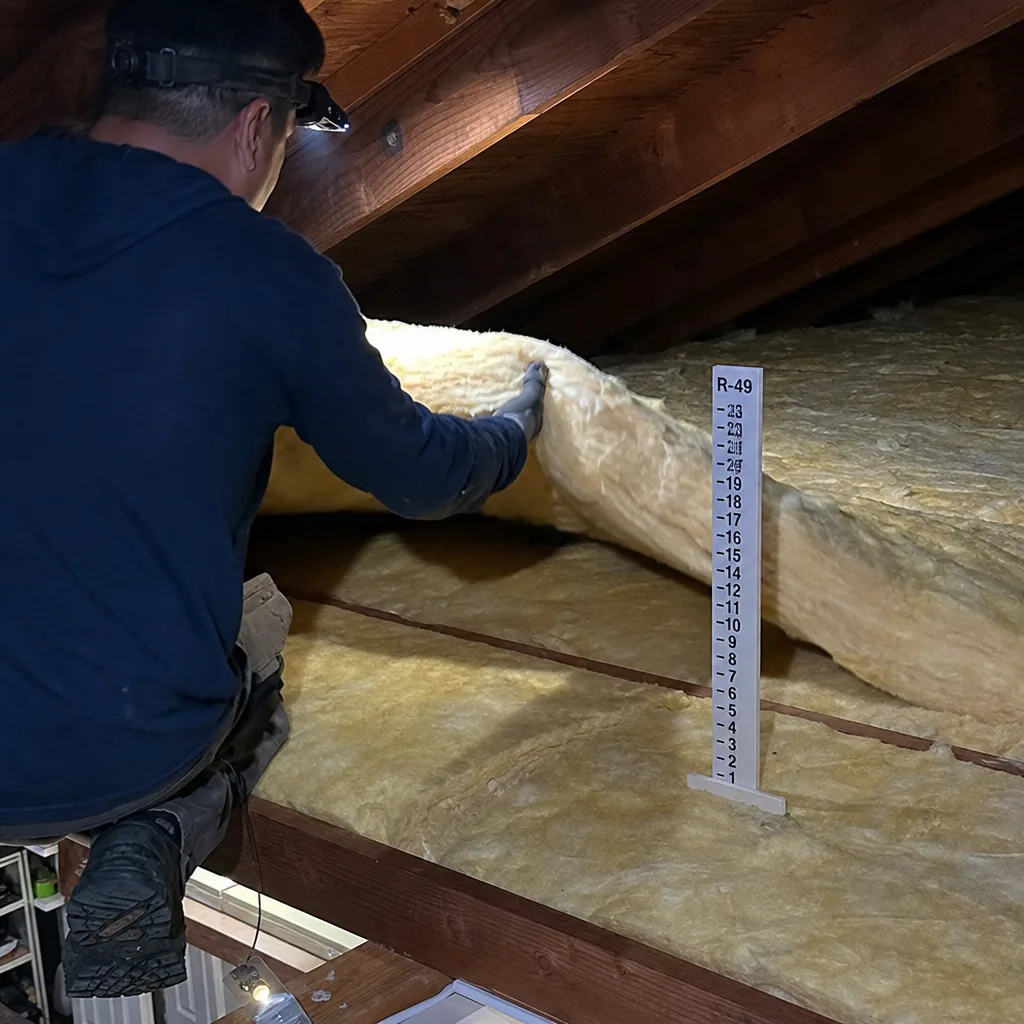
- Buena Park’s climate zone and Title 24 requirements: Buena Park falls in California Climate Zone 8. Title 24’s residential insulation minimums for Zone 8 require R-38 in the ceiling/attic for most projects. Closed-cell foam to meet R-38 on a roof deck requires approximately 5.5 to 6 inches of application. Knowing this going in affects how much material the crew brings and what they quote – an underquoted job that runs short of material mid-application is one of the more common reasons homeowners end up with a second contractor call.
- Combined scope with air sealing and blower-door verification: Jobs that include a pre- and post-application blower-door test – a pressurization measurement that shows, in a single figure, how much conditioned air the building envelope is losing – take longer but deliver documented proof of performance. We publish those numbers on applicable jobs. If a quote you’re comparing doesn’t mention air leakage at all, ask why.
How the Buena Park Climate Makes Spray Foam the Right Call
Buena Park sits inland enough from the coast that summer afternoon temperatures regularly push into the low-to-mid 90s in July and August, while winter nights can drop to the mid-40s. That 40-plus-degree daily swing in peak seasons puts your HVAC system under real pressure, and an under-insulated or leaky attic is where most of that pressure comes from. Homes in the La Palma Avenue and Western Avenue corridors that were built before 1985 were typically insulated to R-11 or R-19 – code minimum at the time – which is well below what California’s current Title 24 standards require and well below what makes economic sense with today’s utility rates from Southern California Edison.
Spray foam handles both problems at once: it insulates and it air-seals. Blown-in cellulose or fiberglass does neither as completely – both require a separate air-sealing step to perform at their rated R-value, and even then, they don’t stop air movement through the insulation mass the way a properly applied closed-cell foam does. For a Buena Park attic that’s both under-insulated and leaking – which is the majority of the homes we assess in the city – our Spray Foam Insulation services on the roof deck convert the attic from an unconditioned hot box into a semi-conditioned space, which also protects HVAC equipment and ductwork that sit in the attic.
We’ve seen attic temperatures in Buena Park homes measure over 140 degrees Fahrenheit in July before a roof-deck spray foam application and drop to within 10 degrees of living space temperature after. That change reduces the temperature differential your air conditioner is fighting against, which translates directly into shorter run times and lower monthly bills.
How to Save on Spray Foam Insulation in Buena Park
Understand What You Actually Need Before Getting Quotes
The most expensive mistake Buena Park homeowners make is getting quotes from three contractors without knowing what their home needs. One contractor quotes open-cell at R-19; another quotes closed-cell at R-38 on the roof deck; a third quotes blown-in with air sealing. You’re comparing three completely different scopes and wondering why the prices look nothing alike. Before you call anyone, know your attic type (floor application vs. roof deck application), your current insulation condition, and whether you have recessed lighting that needs sealing. A home energy audit – which we do as a standalone service – gives you that baseline and tells you what application actually makes sense.
Combine Air Sealing and Insulation in One Visit
Mobilizing a spray foam crew is a fixed cost. The rig has to drive to Buena Park, the equipment has to heat up to operating temperature, and the technician has to suit up regardless of whether the job is 400 square feet or 1,400. Scheduling air sealing and insulation on the same visit rather than as separate projects can save $200 to $600 in mobilization costs and reduces the disruption to your household to a single day.
Check Available Utility Rebates
Southern California Edison offers residential energy efficiency rebates under its Energy Savings Assistance and California Alternate Rates for Energy programs for qualifying households. The California Energy Commission also runs periodic incentive programs tied to Title 24 compliance upgrades. These rebates change year to year, so we pull the current schedules when we scope a job rather than citing numbers that may be outdated. Ask us what’s current when you call – it affects how we structure the written scope.
Get a Written Price Before Any Work Starts – and Hold Every Contractor to That
Under the Haven Standard, a written price before any work starts is clause one – not a courtesy, not a sales tactic, a documented commitment. Any contractor who won’t give you a flat, written price before a crew touches your home is transferring financial risk onto you. Get it in writing, including scope, materials specified by brand and type, and the warranty terms. If a contractor hands you a verbal quote and asks you to decide on the spot, that’s a reason to slow down.
If you have a written estimate from another contractor and want a second opinion before committing, bring it to us. We’ll read it with you and tell you exactly what it does and doesn’t include. That’s included at no charge – no obligation to book with us afterward.
Don’t Over-Insulate the Wrong Surface
In a Buena Park home where the HVAC equipment and ducts live in the attic, a roof-deck spray foam application (converting the attic to conditioned space) usually delivers more return per dollar than adding insulation to the attic floor. But in a home where equipment is in a closet and ducts run through interior walls, an attic floor application makes more sense and costs less. The application that costs less isn’t always the wrong one – it depends on where your thermal and air-leakage losses actually are. A blower-door test tells you; guessing costs money.
For a free written estimate on your specific home, call (562) 418-5767. We’ll schedule a site visit, document what we find with photos, and give you a flat price in writing before we discuss next steps.
Open-Cell vs. Closed-Cell Foam: Which Costs More and Which Is Right for Buena Park?
This question comes up on nearly every Buena Park estimate we do, and the answer is almost always closed-cell for roof decks and exterior walls, open-cell as an option for interior applications where vapor drive isn’t a concern.
Open-cell foam expands to roughly 100 times its liquid volume, meaning it fills cavities thoroughly and is excellent for interior walls and cathedral ceiling assemblies where vapor retarder requirements are less strict. It costs less – typically $1.50 to $2.00 per board foot installed for residential applications in Buena Park. Its R-value runs about 3.5 to 3.8 per inch, so meeting R-38 on an attic floor would require approximately 10 inches of application depth, which is often not practical in a roof-deck scenario with limited rafter depth.
Closed-cell foam runs about $2.75 to $4.50 per board foot installed in Buena Park, but it delivers R-6 to R-7 per inch, meaning you can hit R-38 in about 6 inches of application. It also serves as a Class II vapor retarder, which matters in roof assemblies. In California Climate Zone 8, the combination of insulation performance and vapor control in a single application is usually worth the price difference for roof-deck work. For a standard 1,200-square-foot Buena Park attic roof deck, the price difference between open-cell and closed-cell typically works out to $1,200 to $2,000 for the full job – real money, and worth understanding before you sign anything.
Icynene and Demilec are among the foam chemistries we source depending on the application and site conditions. Neither is specified as a default because the chemistry needs to match the temperature, humidity, and substrate on the day of application, not a preference decided in a sales office.
What a Spray Foam Job Looks Like at Envelope Insulation Co.
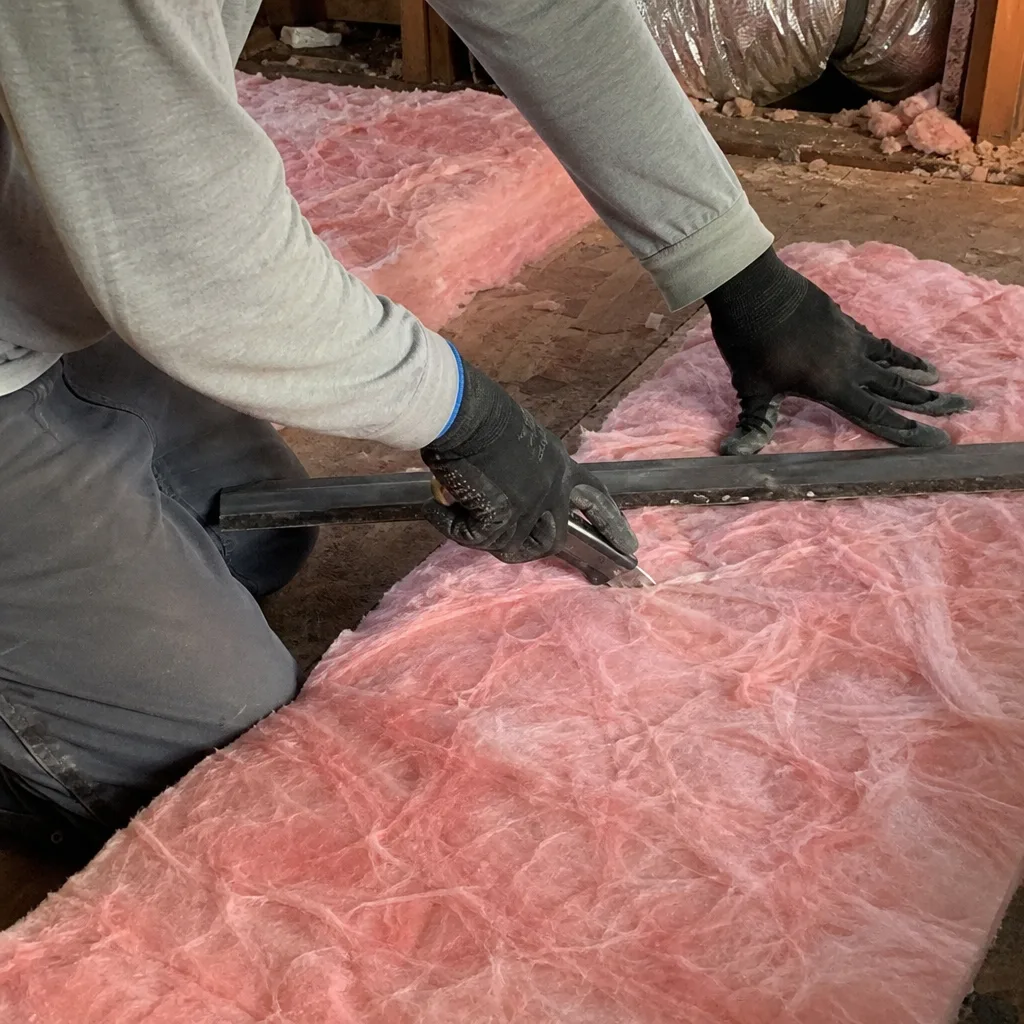
Before the crew arrives, you’ll have a written scope that names the surfaces being treated, the foam type and depth specified by R-value, the brands being used, the warranty terms, and the flat price. That’s Haven Standard Clause 1: written price before any work starts, always.
On the day of work, the technician assigned to your job is background-checked and arrives in a marked, uniformed vehicle. You’ll receive a text when they’re on the way – no guessing about a four-hour arrival window. If the job is a roof-deck spray foam application, the crew begins with air sealing at the attic floor level: top plates, electrical and plumbing penetrations, recessed can lights. We document each penetration with photos before sealing. Once air sealing is complete and documented, the spray foam goes on. That order is not flexible – insulating before sealing air leaks is a way to spend money without fixing the problem.
On applicable jobs, a blower-door test is run before work begins and again after completion. The numbers go into your Documented Photo Record: a pressurization reading that shows exactly how much air your building envelope was losing before we started and how much it’s losing when we leave. A typical Buena Park home we’ve worked on has gone from readings in the 3,800 to 4,500 CFM50 range (CFM50 is the cubic feet per minute of air moving through the envelope at 50 Pascals of pressure – a standard test pressure) down to 1,600 to 2,400 CFM50 after a combined air sealing and spray foam job. Those numbers go to you in writing.
The 365-Day Done Right Promise covers every completed job: if something isn’t right within the first year, we make it right. That’s documented in writing before the crew starts – not a verbal promise made after you’ve written a check.
Since 2016, Wes Okafor and the team at Envelope Insulation Co. have completed this process on over 9,000 homes – every one with a written price before work started and a documented record when the crew left. That’s not a marketing number; it’s how the home performance model works when the documentation requirement is non-negotiable.
Spray Foam Insulation vs. Other Insulation Types – Cost Comparison for Buena Park
Spray foam costs more per square foot than every other insulation type. Here’s how it compares on an installed basis for a typical Buena Park attic:
- Spray foam (closed-cell, roof deck): $2.75 to $4.50 per board foot installed – highest upfront cost, best air barrier, best per-inch R-value
- Blown-in fiberglass or cellulose (attic floor): $1.20 to $2.00 per square foot installed – lower upfront cost, requires separate air sealing step to perform at rated R-value
- Fiberglass batt (walls, floors): $0.80 to $1.50 per square foot installed – lowest cost, performs worst in leaky assemblies because air can move through the batt
- Rigid foam board (exterior walls, crawl space): $1.50 to $3.00 per square foot installed – good vapor control, no self-sealing, requires careful detailing at joints
The right comparison isn’t spray foam vs. blown-in by upfront price – it’s total cost of the thermal and air-sealing assembly. A blown-in cellulose job done without air sealing first, on a Buena Park home with 18 can lights and open top plates, will underperform its rated R-value by 30 to 50 percent from day one. Spray foam to the roof deck at R-38 seals and insulates in one pass. Over a 10-year period on a Buena Park home running a 3-ton HVAC system, the difference in utility cost between an unsealed blown-in attic and a properly spray-foamed roof deck can run $3,000 to $6,000, depending on rate increases and usage patterns. That math doesn’t make spray foam the automatic answer for every situation, but it does make the upfront price difference look different than it does on a single invoice.
FAQs – Spray Foam Insulation Cost in Buena Park
How much does spray foam insulation cost per square foot in Buena Park?
Installed spray foam in Buena Park costs $1.50 to $2.00 per board foot for open-cell and $2.75 to $4.50 per board foot for closed-cell. One board foot is one square foot at one inch of thickness, so a 3-inch closed-cell application on a 1,200-square-foot attic roof deck involves 3,600 board feet of foam – and the installed cost for that scope typically lands between $3,800 and $5,400 in the current Buena Park market. Call (562) 418-5767 for a written quote specific to your home’s dimensions and application type – estimates are free and come with a flat price in writing.
Is spray foam insulation worth the cost compared to blown-in in Buena Park?
For attic roof-deck applications in Buena Park homes where the HVAC equipment lives in the attic, spray foam is typically worth the cost difference. Converting the attic to conditioned space protects the equipment, reduces the thermal load on the air conditioner, and eliminates the need for a separate air-sealing pass. For attic floor applications in homes with conditioned mechanical rooms, blown-in insulation combined with a thorough air-sealing step can perform nearly as well at lower upfront cost. The answer depends on your specific attic configuration – a site visit tells you what you’re actually working with. Call (562) 418-5767 for a free written estimate.
How long does spray foam insulation last in a Buena Park home?
Properly applied closed-cell spray foam has a service life of 80 years or more under normal conditions and does not settle, compress, or absorb moisture the way fiberglass batts do. Open-cell foam is similarly durable but is vapor-permeable, so it should not be used in applications where moisture drive from the roof deck or exterior walls is a concern. In Buena Park’s climate – warm, dry summers and mild winters – both foam types hold up well. The limiting factor is usually application quality: foam applied at the wrong substrate temperature or incorrect mix ratio can shrink, crack, or lose adhesion within the first few years. That’s why documented photo records and a 365-Day Done Right Promise matter.
Can I get a rebate for spray foam insulation in Buena Park?
Yes, rebates are available through Southern California Edison for qualifying residential insulation upgrades, and California state programs periodically offer incentives for projects that bring a home to or above Title 24 energy efficiency standards. The exact rebate amounts change year to year and depend on your household income bracket and the scope of work. We pull current rebate schedules at the time of each estimate and factor them into how we present the written price. Call (562) 418-5767 to ask what’s currently available before you book anything.
How do I know if I need spray foam or just air sealing in Buena Park?
A blower-door test – a pressurization measurement that shows, in a single number, how much air your building envelope is losing – is the most direct way to answer that question. Homes testing above 3,500 CFM50 typically have significant air-leakage problems that no amount of added insulation alone will fix. Homes with adequate existing insulation depth but poor air sealing may need sealing more than new foam. Homes with both problems – low insulation and high air leakage, which describes most Buena Park houses built before 1990 – benefit from a combined scope. We start every job by assessing what’s actually there, documented with photos, before a written price is issued. Call (562) 418-5767 to schedule that assessment.
Does the crew need to remove existing insulation before spraying foam?
For attic floor applications being converted to a roof-deck foam job, yes – existing insulation at the floor level typically needs to be cleared so the foam can be applied directly to the roof deck and rafter bays. Removal costs an additional $1.00 to $2.50 per square foot depending on depth and condition. For jobs adding spray foam to an already-clear roof deck or to wall cavities during a renovation, removal isn’t a factor. Contaminated material – rodent waste, suspected vermiculite, or mold-affected insulation – is assessed before any removal begins. We document the condition in photos and price the removal separately, in writing, before anything is pulled out.
Key Takeaways
- Spray foam insulation in Buena Park costs $1,800 to $6,500 for most residential jobs, with the average full-attic project around $3,200.
- Closed-cell foam costs more per board foot but delivers higher R-value per inch and acts as a vapor retarder – usually the right specification for roof-deck and exterior wall applications in California Climate Zone 8.
- Air sealing top plates, can lights, and penetrations before foam is applied is not optional – it’s what makes the insulation perform at its rated R-value.
- Buena Park homes built before 1990 are almost universally under-insulated and under-sealed; a blower-door test before committing to any scope tells you exactly where the losses are.
- Southern California Edison rebates are available for qualifying projects – the exact amounts change, so ask at the time of estimate.
- A written price before any work starts, a Documented Photo Record, and before-and-after blower-door numbers are standard on every applicable job – not add-ons.
Ready to see what your Buena Park home actually needs? Call (562) 418-5767 to schedule a free written estimate. Wes Okafor and the team at Envelope Insulation Co. will assess your attic or crawl space, document what they find with photos, and give you a flat price in writing before any conversation about scheduling work begins. Live answer, no voicemail loops – call any time.
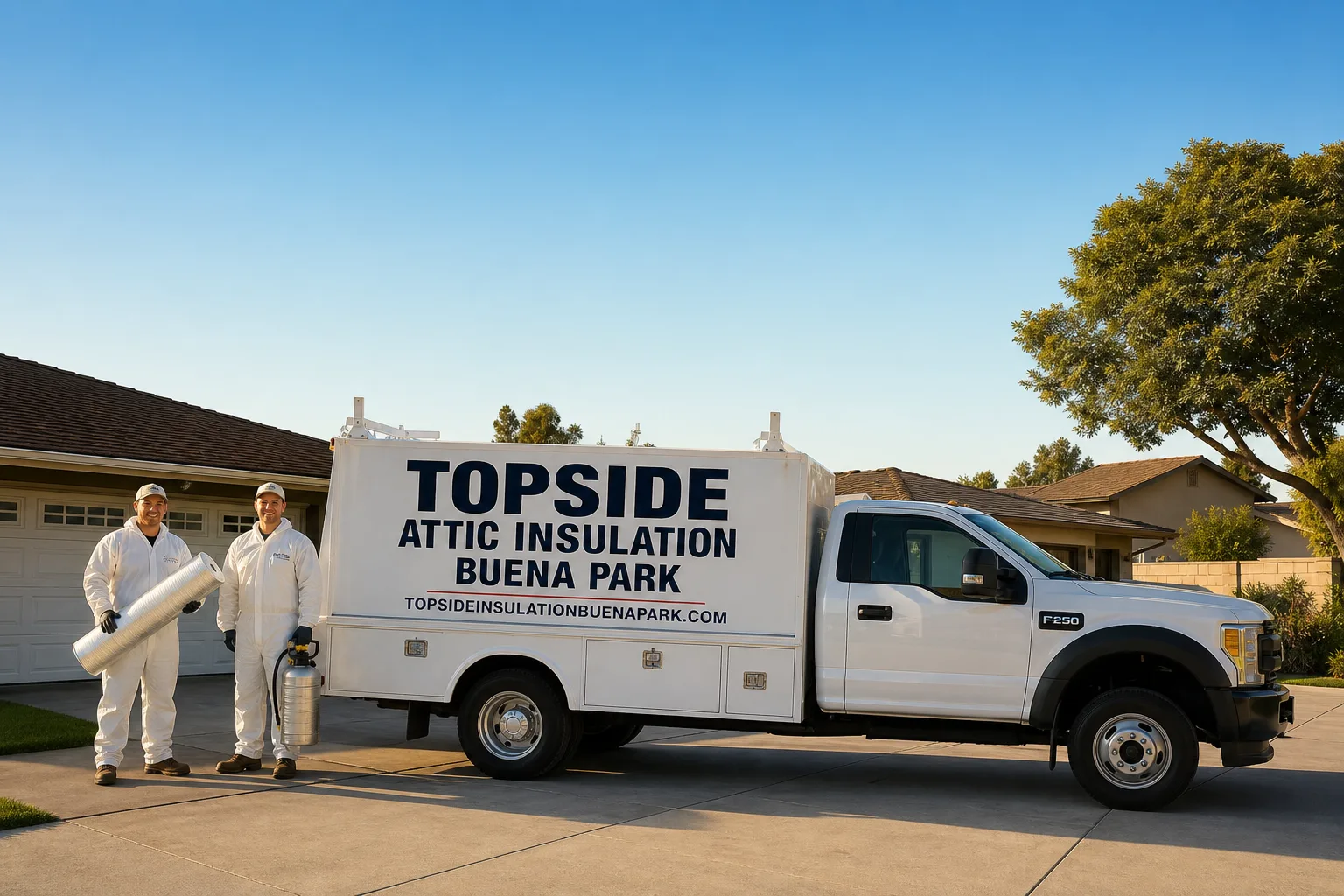
Written by Wes Okafor, Owner at Envelope Insulation Co. (operating as Topside Attic Insulation Buena Park), serving Buena Park, CA since 2016. Pricing reflects the Buena Park market as of 2026. Topside Attic Insulation Buena Park offers free estimates – call (562) 418-5767.
What Our Customers Say
"They photographed rodent damage in the old insulation that we had no idea about, and priced the exclusion work separately so we could decide."
- Harriet N."Turned up on time, protected the hallway, and the written scope matched what was actually done."
- Bruno S."They air-sealed the attic floor before insulating and showed me the blower-door number before and after. The upstairs is finally the same temperature as downstairs."
- Marisol D.