
Johns Manville Crawl Space Encapsulation: The Buena Park Owner’s Guide
We stock and install Johns Manville-compatible crawl space encapsulation systems in Buena Park, with most complete vapor-barrier-and-seal jobs running $3,800-$6,200 depending on crawl square footage and existing moisture damage. Same-day assessments are available, and we carry Johns Manville 8-mil and 12-mil reinforced polyethylene barriers plus seam tape and mastic on our trucks. Most Buena Park homeowners discover their encapsulation has failed when they notice a musty smell returning after months of absence, or when they spot standing water on the vapor barrier during a routine HVAC filter change in the crawl.
Which Johns Manville Models This Applies To
Johns Manville does not sell crawl space encapsulation as a branded “system” with model numbers like a furnace or water heater. Instead, they manufacture the component materials that contractors assemble: reinforced polyethylene vapor barriers in 8-mil, 12-mil, and 15-mil thicknesses, plus acrylic-based seam tape and butyl mastic for sealing to foundation walls. If your existing encapsulation was installed between 2010 and 2020, there’s a strong chance it used JM’s earlier 6-mil non-reinforced polyethylene, which degrades faster in Buena Park’s clay-heavy soils and seasonal moisture swings.
To identify what you have, check the barrier edge where it meets the foundation wall. Johns Manville stamps their logo and mil rating into the polyethylene every 24 inches. If you see “JM” with no mil number, it’s pre-2015 stock and likely due for replacement regardless of visible condition. We also stock Reflectix foil-faced bubble insulation for rim-joist applications where Johns Manville barrier alone isn’t specified. Topside Attic Insulation Buena Park is an independent service provider, not affiliated with Johns Manville.
The OEM-versus-aftermarket question here is straightforward: for the vapor barrier itself, Johns Manville’s 12-mil reinforced product is worth the slight premium over generic equivalents because the woven scrim layer resists puncture from Buena Park’s common river-rock crawl bedding. For seam tape and mastic, we use JM-specified products or equivalent ASTM E1745 Class A-rated alternatives that we’ve pressure-tested at 50 pascals on our blower-door rig.
Signs Your Johns Manville Crawl Space Encapsulation Is Failing
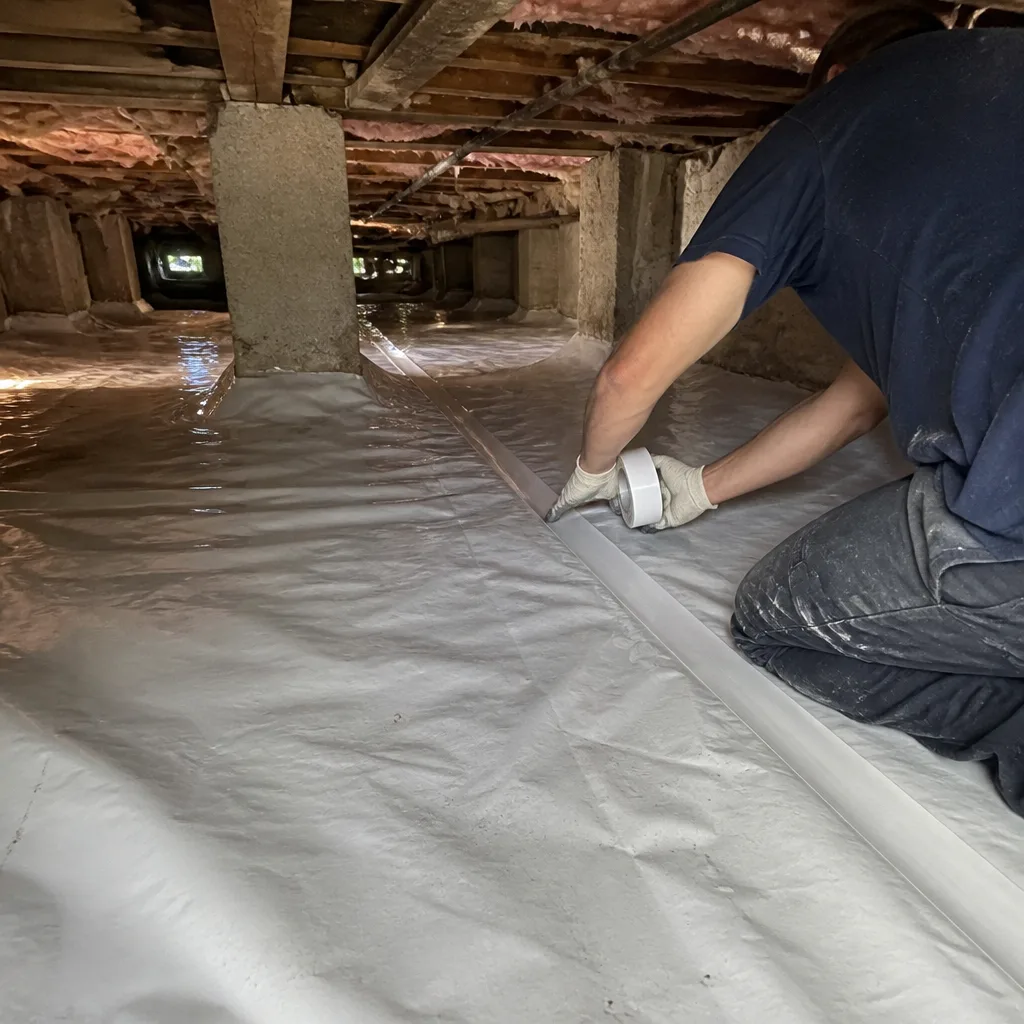
- Musty odors returning to the first floor. This means your vapor barrier has separated at the seams or the mastic bond to the foundation wall has failed, letting soil gases and moisture bypass the seal. In Buena Park’s older neighborhoods near Beach Boulevard, we see this often where clay soil expansion has pulled tape loose during winter rains.
- Standing water on top of the barrier. The barrier is doing part of its job by blocking ground moisture, but water is entering from another source: a failed exterior grade, plumbing leak, or condensation from uninsulated ductwork. The barrier alone can’t manage liquid water; it needs a functioning drainage strategy.
- White or gray powder on the barrier surface. This is efflorescence, mineral salts left behind when moisture evaporates through a compromised section. It tells us the barrier has pinholes, tears, or seam gaps that weren’t visible during a casual look.
- Sagging or pooled areas in the barrier. The polyethylene has stretched beyond recovery, usually from foot traffic during HVAC service or from water accumulation that overloaded the material. JM’s 6-mil and early 8-mil products are especially prone to this; the 12-mil reinforced spec holds shape better.
- Increased humidity readings upstairs. If your indoor relative humidity has climbed 10-15% with no other explanation, your crawl space is breathing unconditioned, moisture-laden air into the house through floor penetrations. The encapsulation seal has failed at the rim joist or subfloor penetrations.
Replacement Cost & What’s Included
In Buena Park, a full Johns Manville crawl space encapsulation replacement typically runs $3,800-$6,200 for crawl spaces between 800 and 1,800 square feet. The low end covers a straightforward barrier swap with intact seam tape and clean foundation walls; the high end includes removing degraded material, treating mold-affected joists, installing new drainage matting, and sealing all rim joists with closed-cell spray foam.
Every job we quote breaks out parts and labor separately under Haven Standard Clause 1: flat price, written scope, written warranty before anyone lifts a tool. The vapor barrier material itself is roughly 15-20% of the total; the remainder is labor for proper preparation, sealing, and our post-install blower-door test to confirm the crawl isn’t communicating with conditioned space. We publish before-and-after blower-door numbers on every encapsulation job so you can verify the air-sealing result in CFM50, not take our word for it.
Our 365-Day Done Right Promise applies to all completed work. If the barrier fails at a seam or the seal degrades within that window, we return and fix it at no charge.
DIY or Call Us?
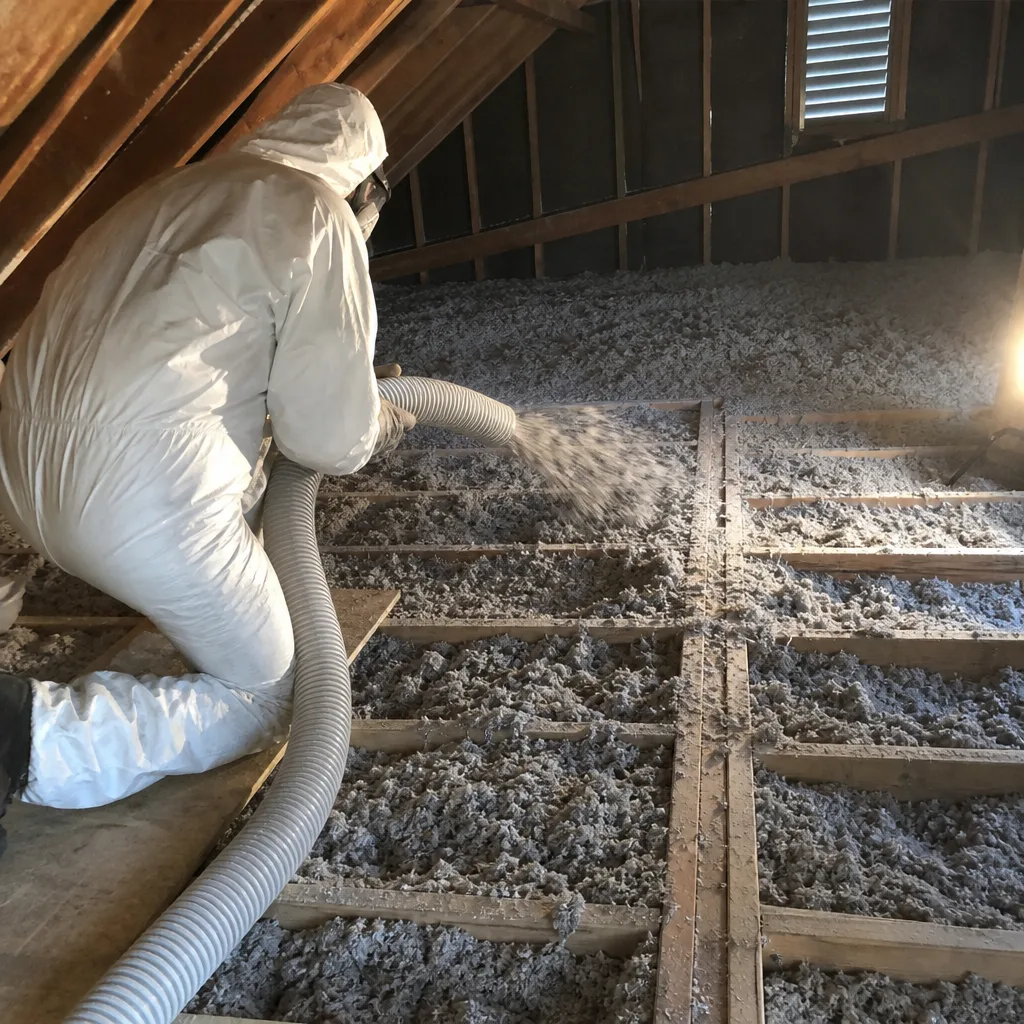
There’s a safe middle ground here, and then there’s where DIY goes wrong. You can safely inspect your own crawl space with a flashlight and a moisture meter: check the barrier edges for tape separation, look for the JM stamp to confirm your material spec, and note any standing water or sagging. Photograph what you find; we use those photos to prep materials before we arrive.
Where DIY fails is in the sealing sequence. Proper encapsulation isn’t laying down a sheet of plastic. It’s sealing the crawl as an extension of the building envelope: negative pressure testing to find leaks, sealing rim joists and penetrations with appropriate materials, then installing the barrier with heat-welded or pressure-sensitive seams that hold at 50 pascals. We’ve been called to Buena Park homes where a homeowner’s weekend barrier install actually trapped moisture against joists because the drainage path wasn’t addressed first. The result was worse than no encapsulation at all.
Seal the leaks first. Then insulate. The numbers on the report will tell you whether it worked. For a written price before any work starts, call us at (562) 418-5767.
FAQs
A properly installed JM 12-mil reinforced barrier with sealed seams typically lasts 15-20 years in Buena Park’s climate, though the 6-mil and early 8-mil products often fail at 8-12 years due to puncture and UV degradation if any light penetrates the crawl vents. Clay soil expansion during wet winters accelerates tape failure at the foundation wall bond. Call (562) 418-5767 for a free assessment of your current material’s remaining life.
Spot repairs work if the failure is limited to a few seams or a single puncture in otherwise sound material; we patch with JM-compatible tape and re-test the seal. If the barrier is extensively degraded, has multiple sag points, or shows efflorescence across more than 20% of the surface, replacement is more cost-effective than chasing individual failures. We quote both options when possible so you can compare.
Most Buena Park crawl space encapsulation replacements take one to two days: half a day for removal and surface prep, half a day for installation and sealing, plus time for any mold remediation or drainage corrections we find. We schedule the blower-door verification for the following morning so the mastic and tape have cured overnight. You’ll receive a Documented Photo Record and the blower-door report before we consider the job closed.
Yes. We carry JM 8-mil, 12-mil, and 15-mil reinforced polyethylene, JM seam tape, butyl mastic, and closed-cell spray foam for rim-joist sealing on every crawl space truck serving Buena Park. For jobs requiring drainage matting or sump pump installation, we pull those from our Orange County warehouse same-day. We don’t leave to “pick up parts” mid-job.
Written by Wes Okafor, Owner, Topside Attic Insulation Buena Park at Topside Attic Insulation Buena Park, serving Buena Park and nearby areas.