
GreenFiber Radiant Barrier Installation: The Buena Park Owner’s Guide
GreenFiber radiant barrier installation in Buena Park typically runs $2,800-$4,600 for a standard 1,500-square-foot attic, and most jobs we book are completed same-day or next-day. We stock GreenFiber-compatible radiant barrier rolls and the fastening hardware specific to their cellulose-blown systems on every truck that serves the Buena Park area. Most homeowners realize something’s wrong when their second-floor rooms won’t cool below 78°F even after sunset, or when their summer electric bill jumps $80-$140 from the previous year despite no change in thermostat settings.
Which GreenFiber Models This Applies To
GreenFiber doesn’t manufacture a dedicated radiant barrier product line under its own name. What Buena Park homeowners typically have is a GreenFiber cellulose insulation system (often their Sanctuary blown-in cellulose, installed at R-38 or R-49) paired with a radiant barrier installed either during original construction or a subsequent retrofit. The compatibility question isn’t GreenFiber-to-GreenFiber - it’s whether your existing radiant barrier (usually a foil-faced product like Reflectix, or a foil-rafter-attached sheet) was installed with the correct air gap above the insulation, and whether the GreenFiber below it has settled or compressed.
To identify what you’re working with: check your attic for a shiny foil layer facing down toward the insulation. If it’s stapled directly to the underside of the roof deck with no gap, it’s doing almost nothing - radiant barriers need a minimum 3/4-inch air space to function. If you see GreenFiber’s gray-dyed cellulose packed against foil with no gap, that’s a failed configuration we correct regularly in the Buena Park zip codes near Beach Boulevard and the 91 corridor. We also see this in homes north of Knott’s Berry Farm where 1980s tract builds got retrofitted in the 2000s with barrier sheets slapped directly over existing insulation.
We source our radiant barrier materials from Owens Corning, Johns Manville, Knauf, Rockwool, CertainTeed, Icynene, Demilec, and GreenFiber - no proprietary lock-in, which means we match what’s already in your attic or upgrade it based on what the blower-door test shows your home actually needs.
Signs Your GreenFiber Radiant Barrier Installation Is Failing
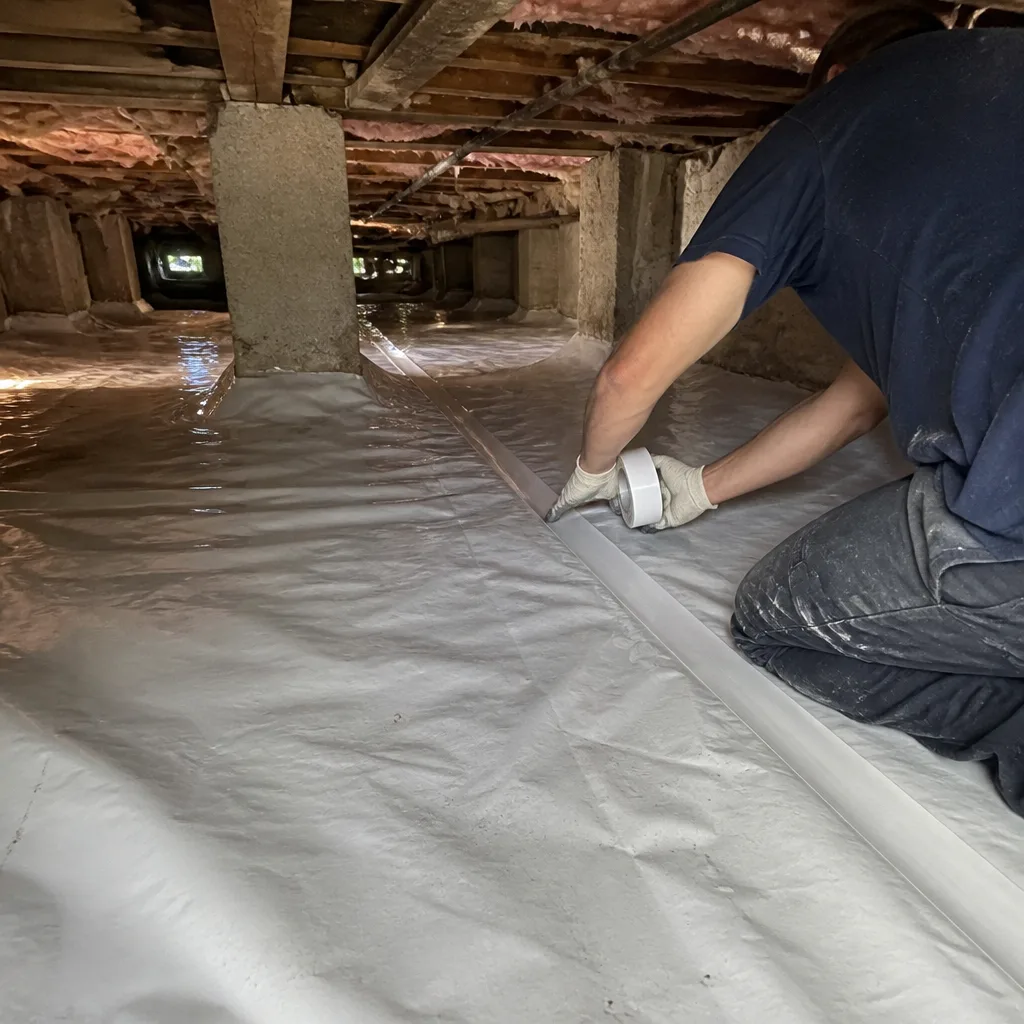
- Hot second-floor ceilings by 4 p.m. - The radiant barrier has torn, detached at fasteners, or was installed without proper air gap, so roof deck heat radiates straight through. In Buena Park’s inland climate, roof surface temperatures hit 150°F regularly in July and August; without a functioning barrier, that thermal load dumps into your conditioned space.
- AC runs continuously from 2 p.m. to 8 p.m. in summer. - Your cooling system is fighting heat gain that a properly installed barrier would block. We measure this with blower-door and infrared camera on every assessment - the temperature differential across your ceiling tells the story.
- Dusty or deteriorating foil visible from the attic hatch. - GreenFiber cellulose produces fine particulate over time; if the barrier wasn’t sealed at edges or used incompatible fasteners, the foil oxidizes and loses reflectivity. We’ve replaced barriers in Buena Park homes where the foil turned chalky white - effectively zero reflectance left.
- Cellulose packed against the barrier with no visible gap. - This is an installation error, not age-related failure, but it’s common enough that we treat it as a de facto failure. Radiant barriers work by reflecting infrared radiation, not by conduction; contact with insulation eliminates the mechanism entirely.
- Moisture staining on ceiling drywall below the attic. - A compromised barrier can trap humidity against the roof deck in winter, or conversely allow conditioned air to hit cold surfaces and condense. Buena Park’s mild winters still produce enough temperature swing for this if the envelope isn’t sealed correctly.
Replacement Cost & What’s Included
| Component | Price Range (Buena Park) |
|---|---|
| Radiant barrier material (foil-rafter, 1,500 sq ft attic) | $1,200 - $1,900 |
| Air sealing of top plates, can lights, penetrations | $600 - $1,100 |
| Fasteners, strapping, edge sealing tape | $180 - $320 |
| Labor for removal of failed barrier + install | $820 - $1,280 |
| Typical installed total | $2,800 - $4,600 |
What drives the range: attic square footage, pitch (steeper = more material + slower work), whether we need to remove existing barrier first, and how much air sealing the blower-door test reveals before we start. We don’t blow anything in until the leaks are sealed - that’s Haven Standard sequencing, not negotiable. Every job closes with a Documented Photo Record and, on applicable work, before-and-after blower-door readings showing your ACH50 improvement. The 365-Day Done Right Promise covers all completed work. Written price before any work starts, always.
DIY or Call Us?
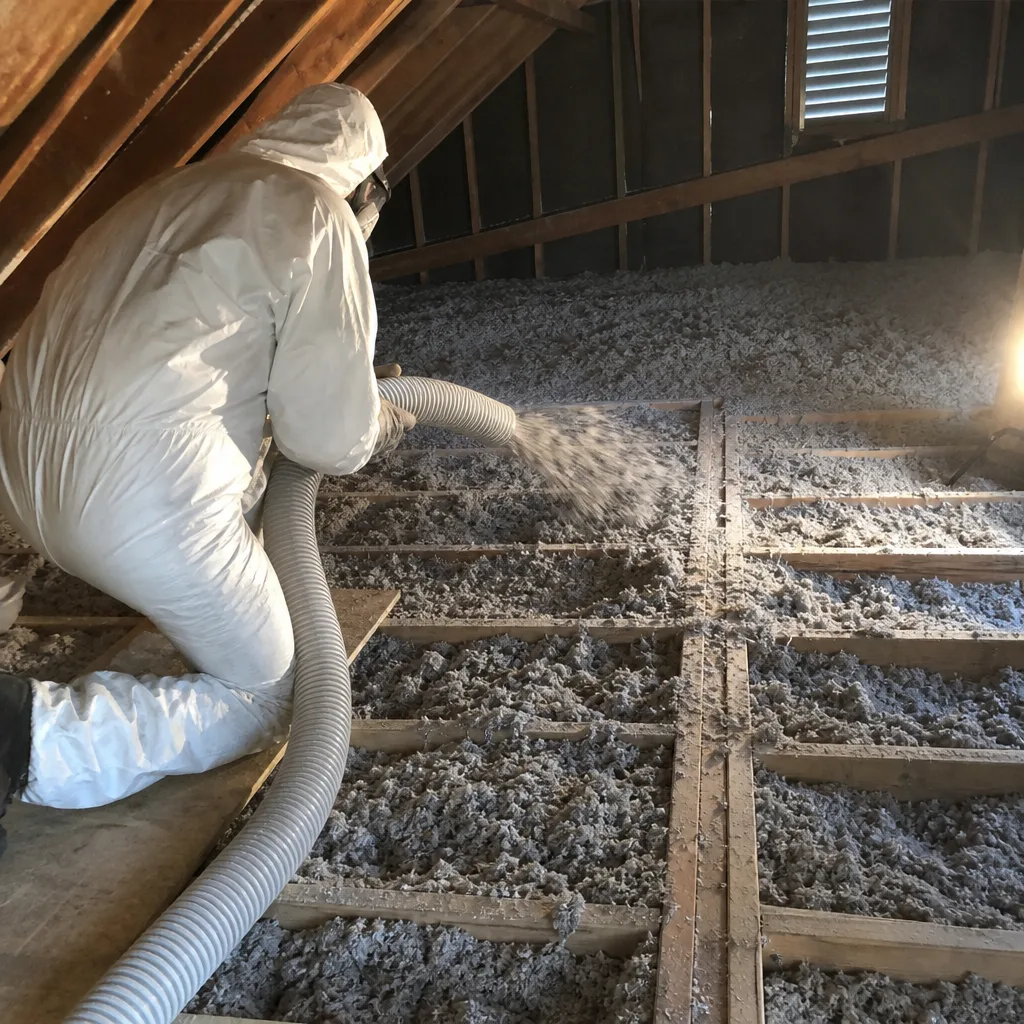
There’s a safe middle ground here. A homeowner can check the attic hatch for visible foil condition, measure whether there’s an air gap with a simple ruler, and photograph any model numbers or installation dates on existing materials. What you should not do: crawl across ceiling joists in summer heat (we’ve had Buena Park homeowners call us after foot-through-ceiling incidents), attempt to staple new barrier while balancing on joists, or disturb vermiculite or older insulation that may contain asbestos without testing.
The actual installation requires working on the roof deck underside, often in 130°F+ attic temperatures, with correct fastener spacing (typically 12-18 inches on rafter centers) and proper edge sealing to maintain the air gap. We carry GreenFiber-compatible barrier rolls and the correct fasteners on every truck. Call (562) 418-5767 - we’ll read your attic with you, show you the blower-door numbers, and give you a written price before anyone lifts a tool.
FAQs
A properly installed radiant barrier in Buena Park’s climate should maintain effective performance for 20-25 years, though fastener corrosion from coastal humidity influence (we’re close enough to get marine layer push) can cause edge detachment in 10-15 years if lower-grade hardware was used. We use corrosion-resistant fasteners as standard. Call (562) 418-5767 for an exact assessment of your existing installation - estimates are free.
Patching small tears is possible, but if the barrier lacks proper air gap, has widespread fastener failure, or shows oxidation across more than 30% of surface area, replacement is the cost-effective choice - repairs on failing material usually need redoing within two years. We evaluate this on every attic visit in Buena Park and show you the photo evidence. Call (562) 418-5767 for a written price on either option.
Most Buena Park residential attic replacements take one full day for crews of two technicians; larger homes or those requiring extensive air sealing before barrier installation may extend to a second day. We schedule with a named technician and text when they’re en route - Haven Standard: Arrive on schedule. Call (562) 418-5767 to check next available date.
Yes - we carry foil-rafter radiant barrier rolls, compatible fastening systems, and edge-sealing materials on every truck serving Buena Park and surrounding Orange County. We also stock Reflectix and other major brands for mixed-system attics. Same-day installation is available for most standard configurations. Call (562) 418-5767 to confirm compatibility with your specific attic layout.
Topside Attic Insulation Buena Park is an independent service provider - not affiliated with or authorized by GreenFiber. We install and service GreenFiber-compatible systems using materials sourced through standard distribution channels.
Seal the leaks first. Then insulate. The numbers on the report will tell you whether it worked.
Written by Wes Okafor, Owner, Topside Attic Insulation Buena Park at Topside Attic Insulation Buena Park, serving Buena Park and nearby areas.