
CertainTeed Attic Air Sealing: The Buena Park Owner’s Guide
Most CertainTeed attic air sealing jobs in Buena Park run between $1,800 and $3,400 installed, depending on attic square footage and how many top plates, can lights, and penetrations need sealing. We stock CertainTeed-compatible acrylic latex caulk, fire-rated foam, and weatherstripping on every truck, and we can usually start the work same day you call. Homeowners typically figure out something’s wrong when their upstairs rooms won’t stay cool in August despite the AC running nonstop, or when they spot dusty insulation around recessed lights that tells them conditioned air is escaping into the attic.
Which CertainTeed Models This Applies To
CertainTeed doesn’t sell a single “attic air sealing kit” under its own badge. Instead, we match their insulation systems with compatible sealing materials rated for the application. If your attic has CertainTeed InsulSafe SP, TrueComfort, or Optima blown-in fiberglass, the critical compatibility point is the top plate and penetration sealant: ordinary latex caulk won’t handle the temperature cycling above a CertainTeed R-38 or R-49 installation in Buena Park’s inland heat, where attic temperatures regularly hit 140°F in July and August.
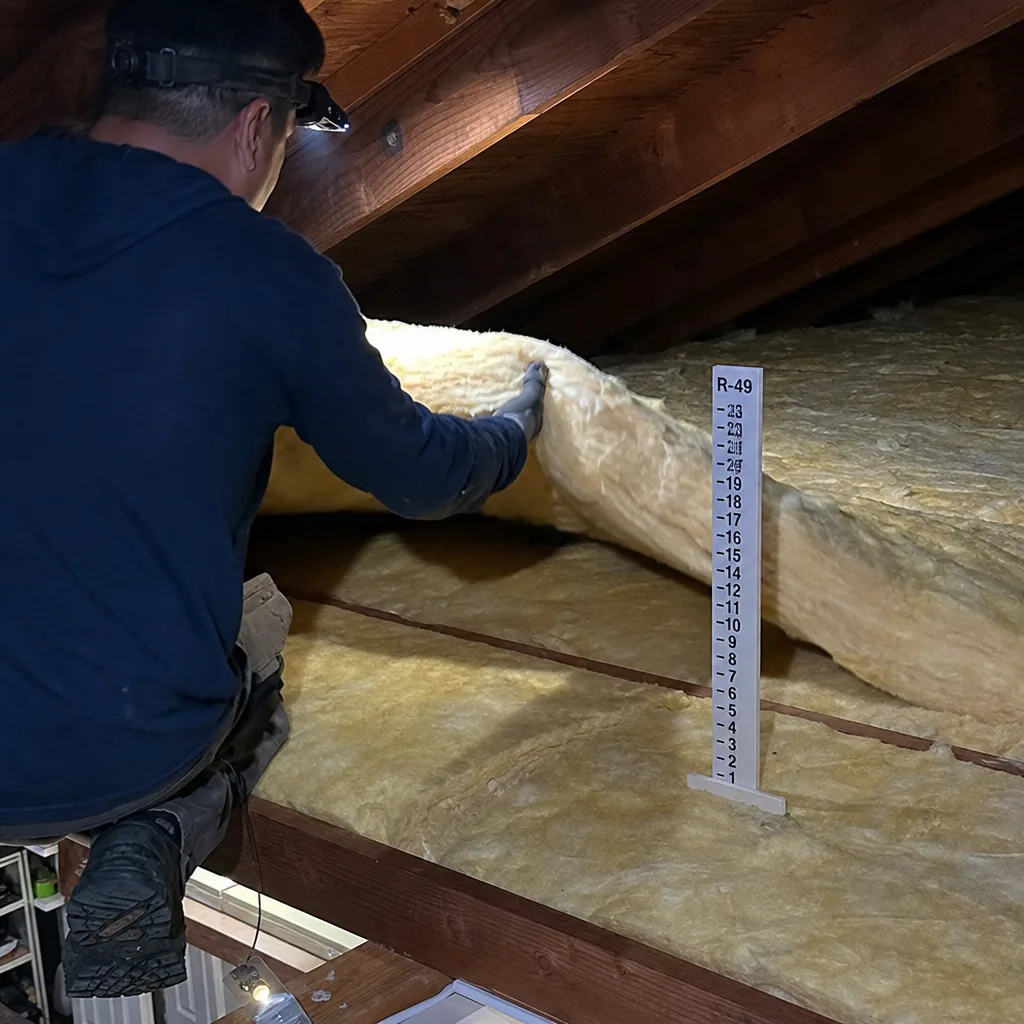
We use CertainTeed-recommended acrylic latex sealants with 300% elongation ratings for wood-to-drywall joints, and fire-rated intumescent foam around electrical penetrations. The OEM spec calls for sealants that maintain flexibility from -20°F to 180°F. Some Buena Park homeowners have tried hardware-store silicone; it skins over in six months and cracks at the top plate. We also stock Knauf and Owens Corning equivalents that meet the same ASTM C920 spec, so you’re not locked into a single supplier. To identify what you need, check the bag label left in your attic from the original install, or measure your existing insulation depth: CertainTeed systems in this market are typically R-30 to R-49, and the sealing strategy changes at the R-38 threshold because of the added weight and thermal stress.
Signs Your CertainTeed Attic Air Sealing Is Failing
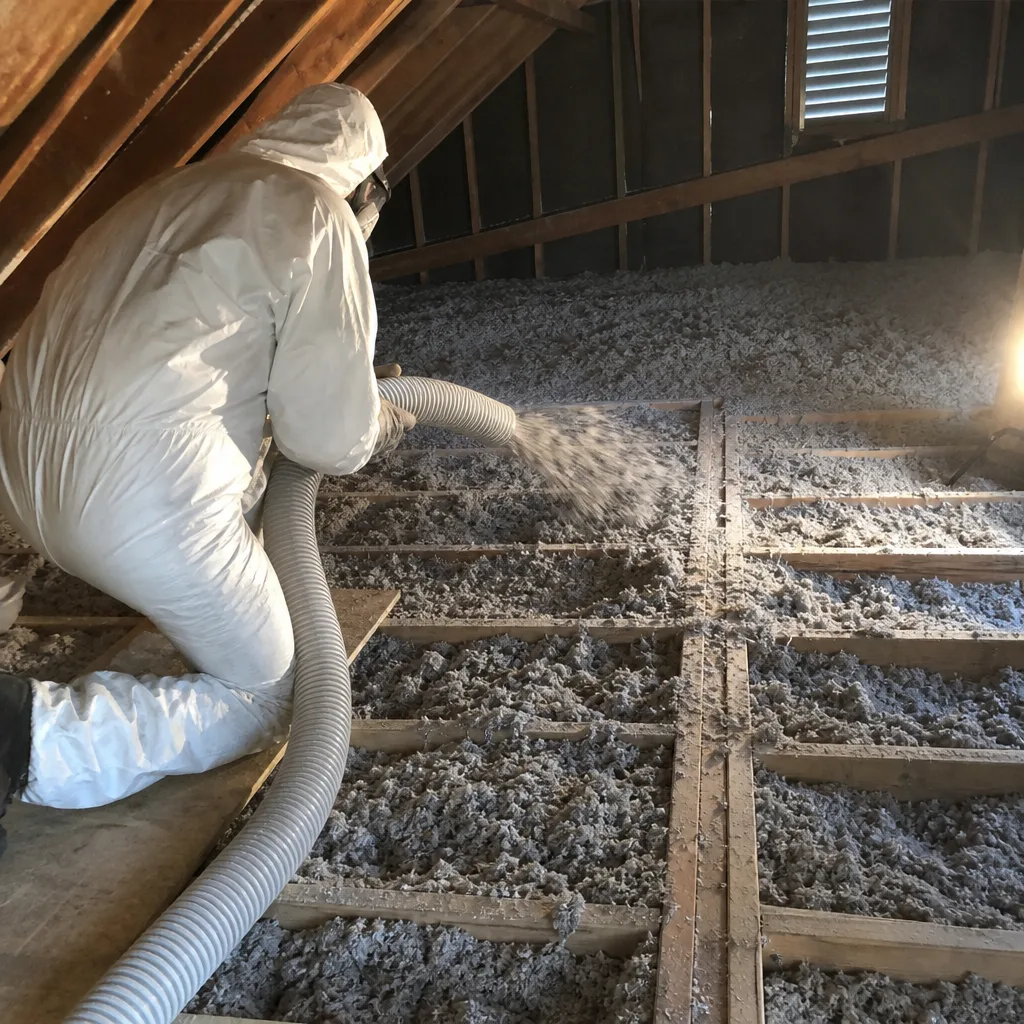
- Hot second-floor rooms in summer, cold ones in winter. Conditioned air is escaping through gaps in the top plates and pulling unconditioned attic air in through the envelope. In Buena Park, where summer delta-T can exceed 50°F between attic and living space, even a 1/4-inch gap along a top plate leaks like an open window.
- Dusty or darkened insulation around recessed can lights. This is filtered air leakage: the can light housing acts as a chimney, drawing conditioned air upward. The dust is your insulation catching the particulates. CertainTeed IC-rated cans still need a sealed box or fire-rated foam cap; the insulation itself doesn’t seal anything.
- Ice damming or moisture staining on ceiling drywall below the attic. Warm, moist indoor air hits cold roof sheathing and condenses. In Buena Park’s mild winters this shows up as subtle water spots rather than dramatic icicles, but the mechanism is identical: air leaks, not inadequate insulation, are the root cause.
- Blower-door reading above 3,500 CFM50 on a home under 2,500 square feet. We see this constantly in post-2015 construction near the Buena Park Mall area, where builders blew insulation over unsealed penetrations to meet code quickly. The insulation hides the leaks but doesn’t stop them.
- Energy bills climbing year-over-year with no rate change. When envelope leakage increases effective heating and cooling load by 20-30%, the equipment runs longer. Homeowners blame the HVAC; the real problem is upstairs, where the attic floor meets the conditioned space.
Replacement Cost & What’s Included
For a typical 1,200-1,800 square foot Buena Park home, complete attic air sealing runs $1,800 to $2,800. Larger homes or those with extensive can light penetrations, HVAC platform gaps, or chimney chases run $2,800 to $3,400. That price includes the blower-door test, labor to seal all top plates, electrical and plumbing penetrations, can light boxes, and the chimney chase, plus materials: acrylic latex caulk, fire-rated foam, weatherstripping for the attic hatch, and metal flashing where required.
We don’t charge separately for the blower-door test on air-sealing jobs; it’s part of the scope. The range shifts based on attic accessibility (truss spacing, whether there’s existing insulation to navigate), and how many penetrations we find. Every job closes with a Documented Photo Record and printed before-and-after blower-door numbers. Under our 365-Day Done Right Promise, if the post-sealing CFM50 doesn’t hit the target we wrote down, we return and find what we missed.
DIY or Call Us?
There’s no high-tension danger here like a garage door spring, but attic air sealing has a specific failure mode that wastes money: homeowners seal the obvious gaps and miss the critical ones. You can safely check your attic hatch weatherstripping, look for daylight through the top plates, and verify that can lights are IC-rated. But the blower-door test is what separates real sealing from feel-good sealing. Without it, you’re guessing.
We’ve also seen DIY foam jobs that blocked soffit ventilation or covered non-IC-rated cans with flammable material. In Buena Park, where summer attic temperatures stress every component, those mistakes show up as moisture damage or worse. If you want to verify the problem yourself, turn on your HVAC fan and hold a smoke pencil near the attic hatch; if it draws upward, you’ve got a leak. For the actual sealing and the number that proves it worked, call (562) 418-5767. We’ll give you a written price before anyone lifts a tool.
FAQs
In Buena Park’s climate, properly installed acrylic latex sealants and fire-rated foam last 15 to 25 years. The critical variable is the initial surface prep: dust, old insulation fragments, or moisture on the substrate cut that lifespan by half. We clean every joint before sealing, which is why we warranty the workmanship for 365 days and see most of our seals holding strong a decade later. Call (562) 418-5767 if you want us to inspect what’s currently up there.
Partial repair is common and often the right call. If only your can light boxes have failed or the attic hatch weatherstripping has compressed, we target just those areas. We only recommend full replacement when the original sealing was done as a rush job (insulation blown over unsealed gaps) or when the materials have degraded across the entire attic floor. We’ll tell you which category you’re in after the blower-door test, and we’ll put that in writing before we start.
Most Buena Park attic air sealing jobs take four to six hours from arrival to final blower-door reading. A small, accessible attic with a dozen penetrations might finish in three hours; a 2,500-square-foot home with a complex HVAC platform and multiple chimney chases can stretch to a full day. We don’t charge by the hour, so the time doesn’t affect your price. You’ll get a text when the technician is on the way, and you’ll have the printed report before we leave.
Yes. Every Topside Attic Insulation Buena Park truck carries acrylic latex sealant rated for 180°F attic service, fire-rated intumescent foam, weatherstripping for standard and oversized attic hatches, and pre-formed can light covers. We also stock Knauf, Owens Corning, and Johns Manville equivalents that meet the same specs, so if your original CertainTeed install used a specific product that’s now backordered, we don’t delay your job waiting for a brand name. Seal the leaks first. Then insulate. The numbers on the report will tell you whether it worked.
Ready to stop losing conditioned air into your attic? Call (562) 418-5767 for a free estimate. We’ll give you a written price before any work starts, and you’ll leave with a Documented Photo Record and blower-door numbers that show exactly what changed.
Written by Wes Okafor, Owner, Topside Attic Insulation Buena Park at Topside Attic Insulation Buena Park, serving Buena Park and nearby areas.