
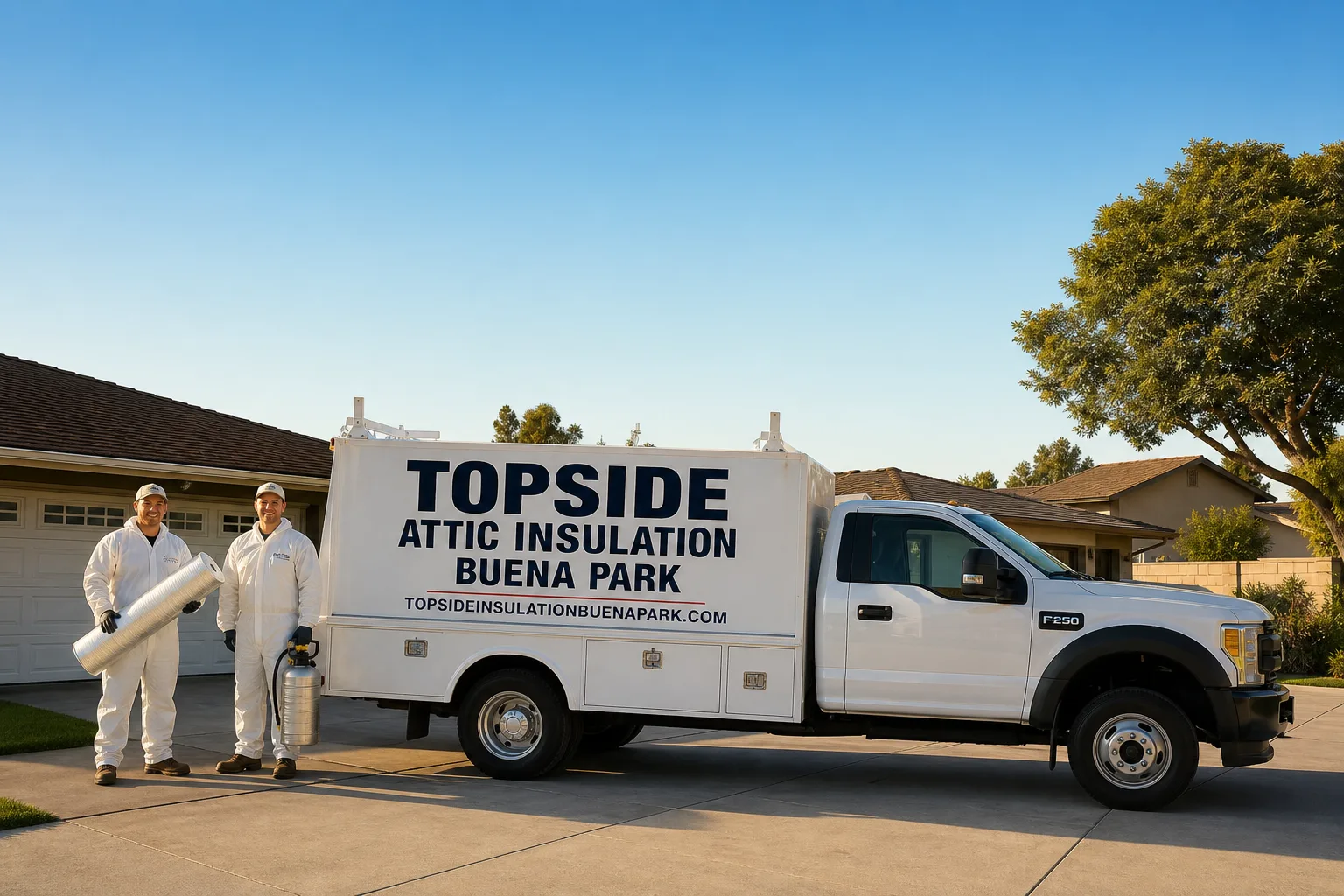
Fast, Reliable Blown-In Insulation Across Placentia
Most blown-in insulation jobs in Placentia run $1,800-$4,200 for a typical 1,200-1,800 square foot attic, and our crews complete them in a single day with the home ready for occupancy that evening. We dispatch to Placentia from our Los Angeles office, and most Placentia homeowners get a same-week appointment. If you’re in one of the 1960s-70s ranch tracts off Kraemer Boulevard, near the intersection of Chapman and Placentia Avenues, or in the older pocket around Bradford Avenue near Old Town, your attic likely matches a dozen others we’ve already sealed and insulated on the same block plan.
Call (562) 418-5767 to schedule a free estimate. A live person answers, 24/7.
Why Topside Attic Insulation Buena Park Is Placentia’s Preferred Blown-In Insulation Company
We’ve worked in enough Placentia attics to recognize the developer plans by sight. The 1968-1974 ranches off Valencia and Van Buren share identical shallow-pitched vented roofs, identical 2×4 top plates with the same unsealed gaps, and identical R-11 batts compressed to something closer to R-6. When we finish a job on one of these streets, neighbors call within days. Not because we canvass aggressively, but because the problem is identical house to house.
Our Placentia customers leave reviews that mention specifics: the photo record showing depth markers, the blower-door printout with before-and-after CFM50 readings, the written price they received before anyone unloaded a hose. We’ve maintained a strong local reputation across northern Orange County by documenting what we do rather than describing how we feel about it.
Response time to Placentia is typically same-week, with emergency scheduling available when attic temperatures are making the second floor unlivable. Our crews know the local permitting path through the City of Placentia Building Division, and we coordinate inspections for jobs that trigger Title 24 compliance documentation.
Our Blown-In Insulation Services in Placentia
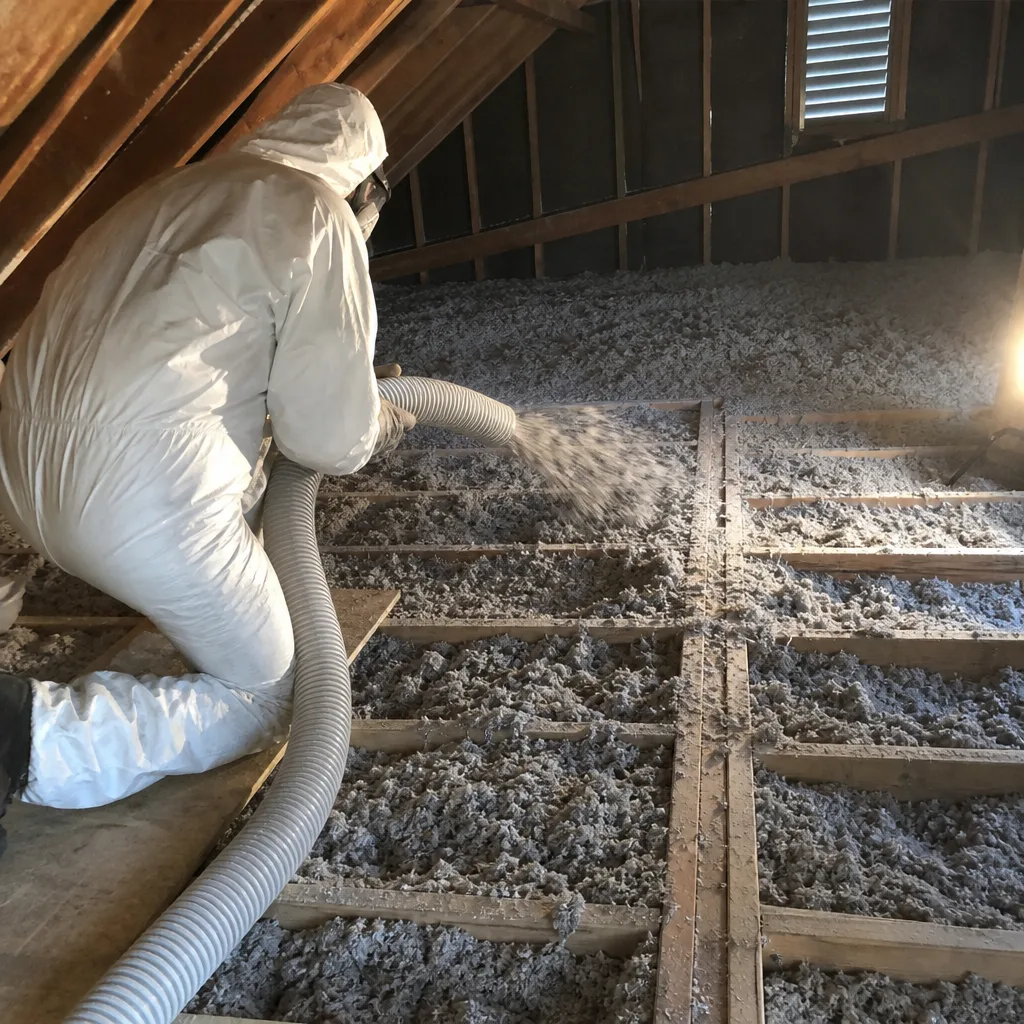
Blown-In Cellulose
Cellulose is our default recommendation for Placentia’s 1960s-70s ranches. GreenFiber cellulose, treated with borate fire retardant, packs tightly into the irregular gaps left by collapsed original batts and adds significant density against the Santa Ana pressure swings that come through Carbon Canyon. We blow to a settled R-38 depth, minimum, with depth markers photographed every 64 square feet so you can verify what was installed without climbing a ladder.
On a 1968 ranch tract off Bradford Avenue near Old Town, our crew found the original R-11 batts compressed to roughly half thickness and drifted into the far corner by decades of attic ventilation cycling. We air-sealed the top plates, baffled the eave vents, and blew GreenFiber cellulose to a settled R-38 depth, then left the homeowner a photo of the depth markers. Within a week, two neighbors on the same plan called with what turned out to be the exact same collapsed-batt attic.
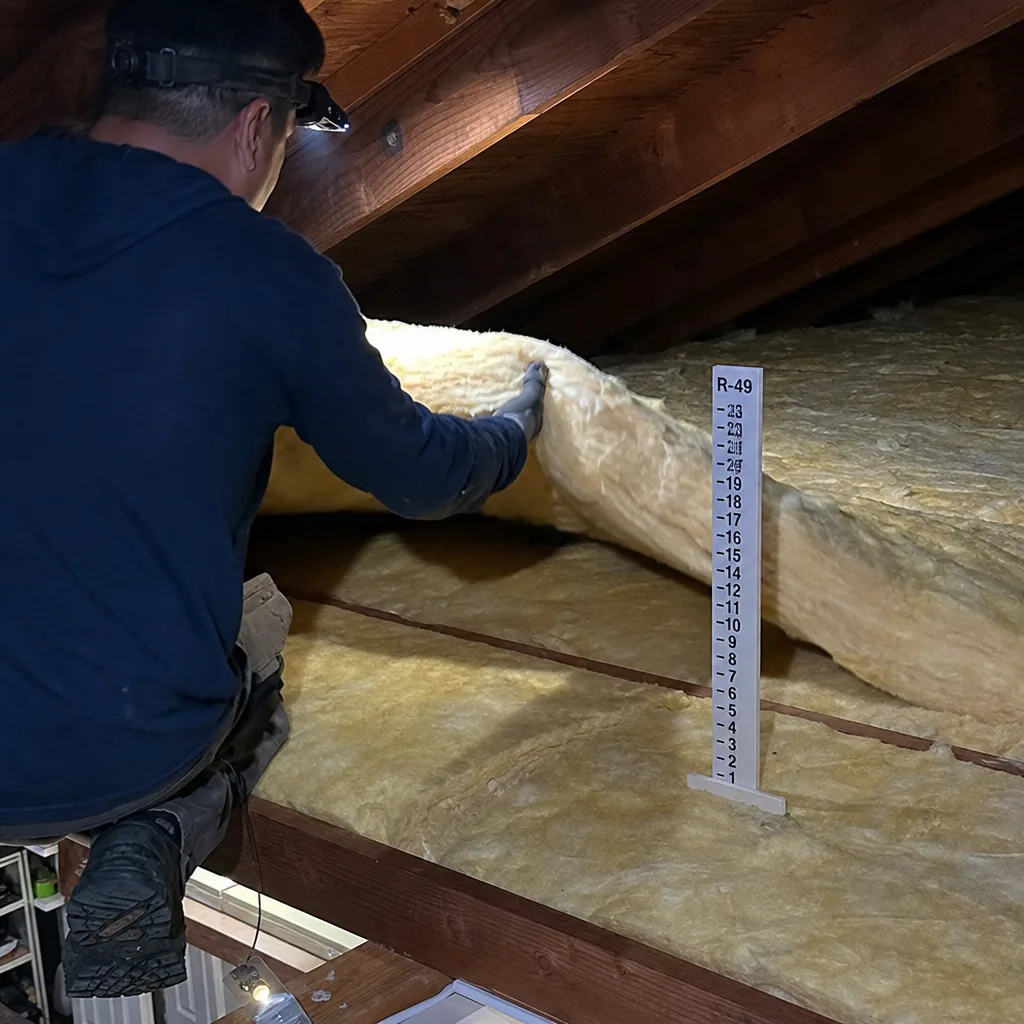
Blown-In Fiberglass
Fiberglass loose-fill works well in Placentia attics where moisture history or prior rodent activity makes cellulose less suitable. We source from Owens Corning and Johns Manville, never proprietary blends you can’t verify. Fiberglass doesn’t settle as densely as cellulose, so we adjust our depth targets upward to hit the same R-value. In Placentia’s 140°F-plus summer attics, fiberglass maintains its thermal resistance without the degradation you’d see in batts that have been cooking since the Nixon administration.
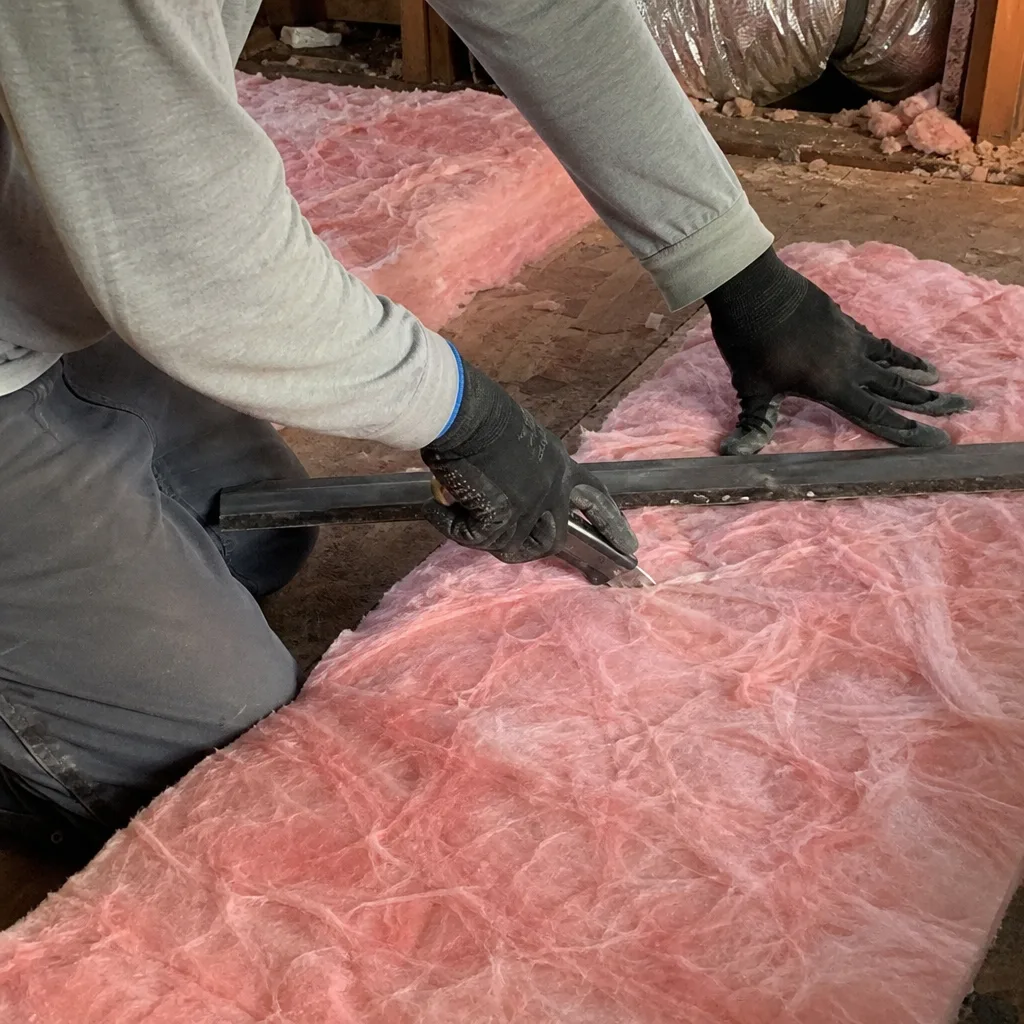
Dense-Pack Wall Insulation
The 2×4 walls in Placentia’s ranch tracts were typically empty or held thin R-7 batts that have long since separated from the cavity. Dense-pack cellulose, blown at 3.5 pounds per cubic foot, fills these walls without removing drywall. We drill access holes at stud-bay spacing, pack the cavity under pressure, and patch with matching texture. For the pre-WWII bungalows near Bradford Avenue, this is often the only practical way to insulate walls that were never designed for it. The density resists the air movement that makes fiberglass batts ineffective in older framed walls.
Blown-In Top-Up
Not every Placentia attic needs a full removal. If your existing insulation is in reasonable shape but thin, we can blow additional material on top to reach current standards. We never top up without first testing what’s there. Compressed, moisture-stained, or rodent-compromised material gets removed. Viable existing insulation gets a calculated overblow. The homeowner receives a written scope stating exactly which approach applies to which attic zone, plus the photo record showing the transition.
Our Blown-In Insulation team treats every top-up as a potential air-sealing job first. Adding insulation over unsealed leaks is, under our standards, not a completed job.
What happens when you call
- 1
A real person answersNo phone trees - you reach a local pro.
- 2
You get an upfront price rangeHonest numbers before anyone is dispatched.
- 3
A background-checked tech heads outLicensed & insured, dispatched right away.
- 4
You approve before work beginsNothing starts until you say go.
Trusted Brands We Service in Placentia
We stock GreenFiber cellulose, CertainTeed fiberglass loose-fill, and Icynene open-cell spray foam for Placentia jobs, with no proprietary lock-in that forces one product where another fits better. Materials arrive directly from regional distribution, so we’re not waiting on freight to start your job. If your home has existing CertainTeed insulation that needs matching for a repair or top-up, we can source the identical product specification. Every bag is documented in your job record with lot number and manufacture date.
Common Blown-In Insulation Problems We See in Placentia Homes
- Original R-11 batts compressed to half-thickness or less. In the 1960s-70s ranches that dominate Placentia’s housing stock, fiberglass batts have spent five decades in attics that regularly exceed 140°F. The material compresses, drifts toward the low side of the attic, and leaves the center of your ceiling effectively uninsulated. We see this on nearly every pre-1980 Placentia job.
- Santa Ana wind displacement of loose-fill. Placentia’s position in the wind corridor funneled through Carbon Canyon means pressure differentials across your roof deck can reach levels that coastal OC never experiences. Cellulose installed without proper baffling and depth control can migrate toward gable ends over time, creating thin spots exactly where you need coverage most.
- Whole-street uniformity masking individual envelope leaks. Because one developer plan repeats across entire blocks, contractors sometimes assume the attic is “standard” and skip the blower-door test. We don’t. The identical plan doesn’t mean identical leakage; one home may have had a bathroom fan installed with an unsealed chase, another may have a kitchen soffit open to the attic. We test every job.
- Insulation blown over unsealed top plates and can lights. This is the most common shortcut we find in Placentia attics done by others. The blow-in looks full and even, but conditioned air is still pumping through the gaps around electrical boxes and wall top plates. Our crews seal first, then insulate. In that order, always.
Pricing for Blown-In Insulation in Placentia, CA
| Service | Typical Range in Placentia |
|---|---|
| Attic blown-in cellulose (1,200-1,800 sq ft, R-38) | $1,800-$3,400 |
| Attic blown-in fiberglass (same specs) | $2,000-$3,800 |
| Dense-pack wall insulation (per 1,000 sq ft of wall) | $2,400-$4,200 |
| Blown-in top-up over viable existing insulation | $900-$2,000 |
| Attic air sealing (standalone, before insulation) | $800-$1,600 |
| Full insulation removal + replacement | $3,200-$5,800 |
What moves a Placentia job toward the higher end: attic access limitations (hatch size, roof pitch), existing material requiring full removal, extensive air sealing of multiple penetrations, or rodent damage remediation before new material goes in. What keeps it toward the lower end: clear access, viable existing insulation that can be topped up, and a straightforward rectangular attic without complex dormers or multiple HVAC platforms.
Every Placentia homeowner receives a written price before any work starts. No exceptions. We also offer a Free Second Opinion on any written estimate from another contractor; bring us their scope and we’ll review it with you line by line. Call (562) 418-5767 for your written estimate.
We Also Serve Cities Near Placentia
Our crews work throughout northern Orange County, including Placentia and neighboring Fullerton, Brea, Anaheim, and Orange. Dispatch and scheduling are coordinated from our Los Angeles office. If you’re on the border between Placentia and Fullerton near the 57 freeway corridor, or in the Brea Hills area with similar tract housing and Santa Ana wind exposure, the same pricing and scheduling applies.
Serving Placentia, CA - Our Local Coverage Area
We’re based in the Placentia area and know this community well. Use the map below to see our service coverage - if you’re nearby, we can almost certainly help.
FAQs - Blown-In Insulation in Placentia
No, not without first assessing what’s there. In our experience with 1969 Placentia ranches, the original R-11 batts are compressed, drifted, and often contaminated with rodent debris or discoloration from roof leaks past. We remove compromised material, air-seal the attic floor, then blow new insulation to a documented depth. If your existing insulation happens to be in genuinely good condition, we’ll note that in your written scope and price a top-up accordingly. Call (562) 418-5767 and we’ll inspect it at no charge.
Yes, measurably. Placentia runs 10-15°F hotter on summer afternoons than Huntington Beach or Costa Mesa, which means your cooling system works harder and longer for the same thermostat setting. A properly insulated Placentia attic reduces that load immediately. Most of our Placentia customers see their most noticeable comfort improvement in September and October, when coastal OC has cooled off but inland heat persists. The payback period is typically shorter here than in coastal zones with equivalent housing stock. Call (562) 418-5767 for a load calculation and written estimate.
Not if it’s installed correctly. We use wind-aware depth control, proper baffling at all eave vents, and containment at gable ends to prevent migration. The field vignette from our Bradford Avenue job is typical: two neighbors called after seeing the result because their identical attics had the identical problem, and the insulation stayed put through the following wind season. We photograph every baffle and depth marker; you get the photo record. If you’re concerned about wind exposure on your specific roof geometry, call (562) 418-5767 and we’ll walk you through the installation plan before quoting.
Look for pink or yellow fiberglass batts, often 3.5 inches thick or less, that break apart when handled and show dark staining from dust infiltration. In Placentia’s developer-repeated tracts, we can often predict what you’ll find before we arrive: R-11 batts, compressed to R-6 or less, drifted toward the low side of the attic. If you’re unsure, we offer free attic inspections with photo documentation. You’ll see what we see, and you’ll get a written scope with no obligation. Call (562) 418-5767 to schedule.
Cellulose for most Placentia attics, fiberglass for specific moisture or compatibility concerns. Cellulose’s higher density performs better against Santa Ana pressure differentials, and its borate treatment resists pests common in older OC attics. Fiberglass is the better choice if you’ve had prior moisture issues or need to match existing fiberglass for a partial repair. We don’t default to one product; we specify in your written scope which material goes where, and why. Both are priced in your estimate, with the recommendation noted. Call (562) 418-5767 for the written scope.
Written by Wes Okafor, Owner at Envelope Insulation Co., serving Placentia and northern Orange County under The Haven Standard since 2016.