
CertainTeed Crawl Space Encapsulation: The Buena Park Owner’s Guide
Most CertainTeed crawl space encapsulation systems we install in Buena Park run between $3,800 and $7,200 for a complete vapor barrier and sealing job on a typical 1,200-1,800 square foot footprint, with same-day service available when we have your liner spec on the truck. We stock CertainTeed-compatible 10-mil and 15-mil reinforced polyethylene vapor barriers, seam tape, and mechanical fasteners for the Buena Park climate zone, where summer ground moisture and winter Santa Ana dryness create expansion-contraction cycles that cheap liners can’t survive. Homeowners usually discover the problem when they notice a musty smell climbing through the floor registers, find fiberglass insulation sagging and black at the belly-band, or spot standing water after a rare heavy rain - all signs the original barrier has torn at the piers or delaminated at the seams.
Which CertainTeed Models This Applies To
CertainTeed doesn’t brand crawl space encapsulation systems with consumer-facing model numbers the way they do roofing or siding. What you’ll find is a specification sheet or installer tag citing the membrane grade: typically CertaWrap for foundation wall applications, or a custom-specified reinforced polyethylene for ground vapor barriers, often in the 8-mil to 20-mil range depending on the original installer. The critical identifier is the mil rating stamped on the liner edge and the seam-tape chemistry - butyl rubber versus acrylic - which determines whether a patch will hold or peel within a season.
We carry both OEM-grade CertainTeed-compatible liners and reinforced alternatives from Johns Manville and Owens Corning that meet the same permeance ratings (0.05 perms or lower) without the proprietary markup. The compatibility gotcha in Buena Park’s clay-heavy soils: CertainTeed’s 10-mil standard liner, common in 2015-2019 installs, lacks the woven reinforcement that prevents puncture from sharp aggregate in our local soil pack. We’ve replaced dozens of these in the neighborhoods near Beach Boulevard and the Artesia corridor where the original installer went thin to hit a price point. If your liner feels like a heavy trash bag and tears easily at a corner, it’s the unreinforced grade and needs full replacement, not patching.
Signs Your CertainTeed Crawl Space Encapsulation Is Failing
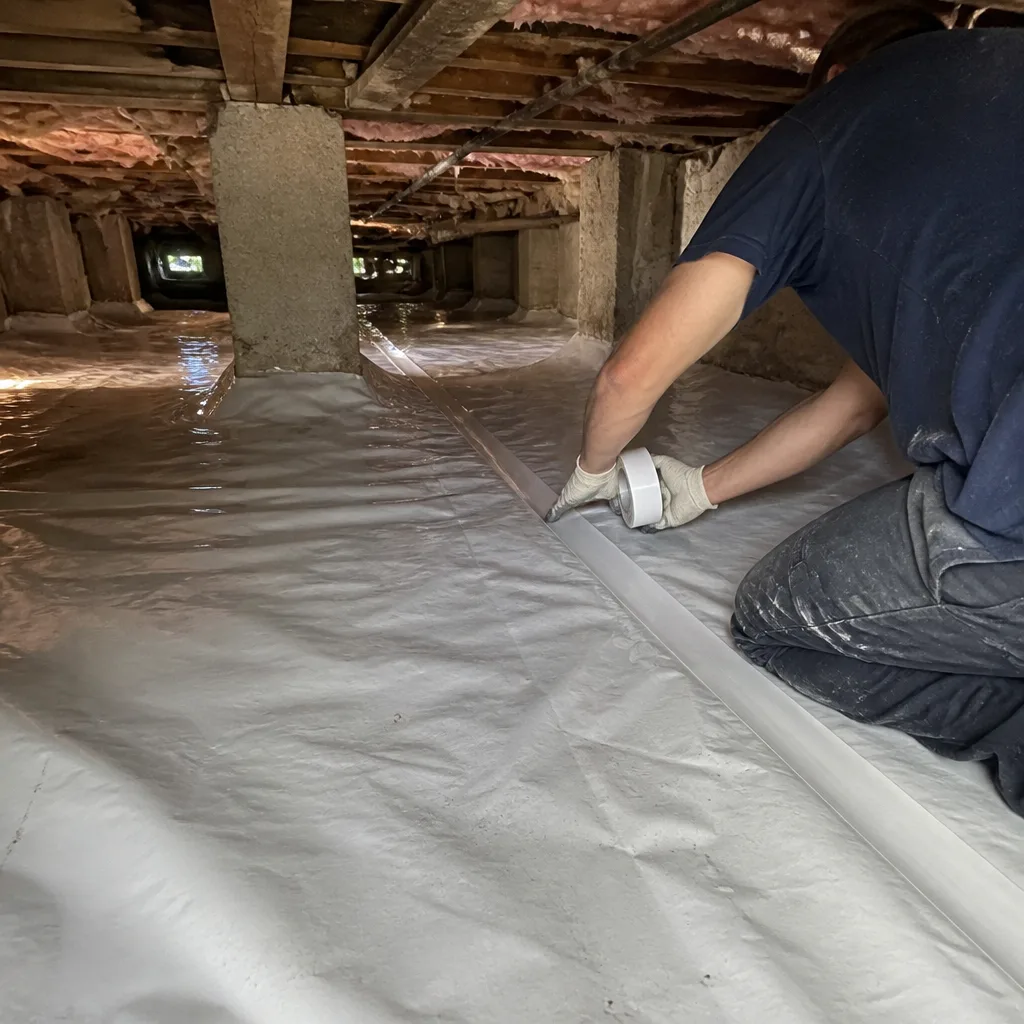
- Musty odors rising through floor gaps. The vapor barrier has separated at the perimeter wall or developed pinholes from rodent traffic, letting soil gas and moisture migrate upward. In Buena Park’s older tract homes near Centralia Street, we see this where the original installer skipped mechanical fastening and relied solely on tape, which gives up after three to four years of thermal cycling.
- Sagging or blackened fiberglass insulation in the crawl space joist bays. When the barrier fails, relative humidity climbs above 70 percent and the fiberglass becomes a mold substrate. The insulation isn’t the problem - it’s the symptom. We remove it, seal the space, then reinstall only after the envelope is verified dry.
- Standing water after rain that doesn’t drain within 48 hours. This usually means the barrier has torn at a support pier or the grade wasn’t properly sloped before installation, creating a low spot where water pools. The CertainTeed liner itself may be intact but the installation detail failed; either way, the water defeats the system.
- White mineral deposits (efflorescence) on the foundation walls. This indicates vapor drive through the block or concrete, which a properly sealed encapsulation system should block. If you’re seeing it, the wall membrane - often CertaWrap or a generic equivalent - has detached or was never applied to the full wall height.
- Increased energy bills with no other explanation. A failed barrier lets humid air infiltrate, forcing your HVAC to work harder. We’ve measured crawl space relative humidity at 85 percent in Buena Park homes where the barrier looked intact but had hidden seam failures at the mechanical connections - the blower-door doesn’t lie, and neither does the hygrometer.
Replacement Cost & What’s Included
For a typical Buena Park crawl space - 1,200 to 1,800 square feet with standard pier spacing - complete CertainTeed-compatible encapsulation runs $3,800 to $5,400 for 10-mil reinforced ground barrier with perimeter sealing, or $5,200 to $7,200 for the 15-mil system with full wall membrane and conditioned-dehumidifier integration. The price spread reflects three variables: current access conditions (we’ve pulled dead rodents and years of stored debris from crawl spaces near La Palma Avenue, which adds labor), whether the original liner requires hazardous-material handling (some 1990s installs used asbestos-containing mastics), and if the space needs active dehumidification to maintain below 60 percent relative humidity.
Every job includes removal and responsible disposal of the failed barrier, surface prep, installation of the new reinforced liner with mechanical fasteners at all piers and perimeter walls, seam sealing with compatible tape, and a post-installation moisture reading. We document the work with photos and provide a written scope and warranty before anyone enters the crawl space - Haven Standard Clause 1. The 365-Day Done Right Promise covers labor and materials; liner defects beyond that period are handled through the manufacturer’s pro-rated coverage.
DIY or Call Us?
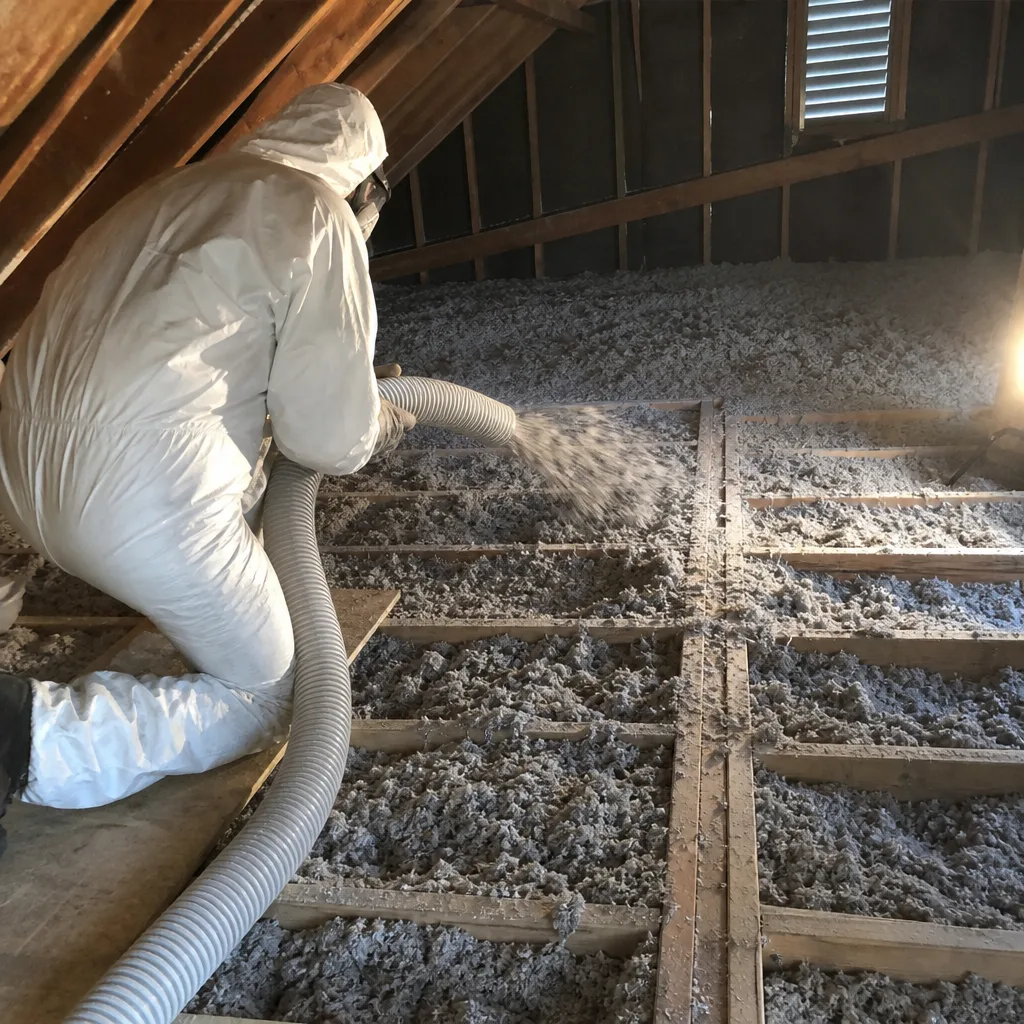
There’s no high-tension danger in crawl space encapsulation the way there is with garage door springs or electrical panels, but there are genuine health risks: disturbed rodent droppings carry hantavirus, decades of accumulated debris may hide asbestos or lead, and working in a confined space with limited ventilation is hazardous without proper respirators and egress planning. What an owner can safely check: verify whether standing water is present (indicating drainage failure), shine a flashlight on the liner seams for obvious separation, and note any musty odors.
Where DIY goes wrong: surface prep determines whether the new liner adheres, and most homeowners don’t own the right mechanical fasteners or know the proper spacing for Buena Park’s seismic requirements. We’ve been called to redo DIY jobs where the homeowner used consumer-grade “vapor barrier” from a hardware store - 6-mil polyethylene that punctures under foot traffic during installation and fails within a year. If you’re considering it, call us at (562) 418-5767 for a free second opinion on your plan. We’ll tell you honestly whether it’s a reasonable weekend project or a false economy.
FAQs
A properly installed reinforced liner in Buena Park’s climate typically lasts 15 to 20 years, though we’ve seen unreinforced 10-mil systems fail in 5 to 7 years due to soil abrasion and thermal cycling. The Santa Ana winds and summer heat create expansion-contraction stress that woven reinforcement handles better than monolithic film. Call (562) 418-5767 and we’ll assess your current liner’s condition - estimates are free.
Small punctures - under two inches, away from seams, in liner less than eight years old - can be patched with compatible reinforced tape if the surrounding material is still supple. Multiple tears, seam separation, or brittle liner (it cracks when folded) means full replacement; patching brittle film is like taping cracked paint. We carry patch kits on the truck for service calls, but we’ll tell you if it’s a waste of money. Call (562) 418-5767 for an honest assessment.
Most residential jobs in Buena Park take one to two days: half a day for access, debris removal, and surface prep, and a full day for liner installation, seam sealing, and post-install moisture verification. Homes with limited crawl space height - common in the 1950s-1970s builds near Knott’s Berry Farm - may take longer simply because movement is restricted. We schedule a hard start time and text when the technician is en route, Haven Standard.
We stock 10-mil and 15-mil reinforced liners, seam tapes, mechanical fasteners, and wall membranes on every service truck serving Buena Park and north Orange County. For CertainTeed-specific CertaWrap wall applications or unusual mil ratings, we can source within 24 to 48 hours through our supplier network - no proprietary lock-in, so we’re not captive to any single manufacturer’s lead times. Call (562) 418-5767 to confirm we have your spec in stock today.
Topside Attic Insulation Buena Park is an independent service provider - not affiliated with CertainTeed, Owens Corning, Johns Manville, or any other manufacturer. We also stock Reflectix and other building envelope materials. Seal the leaks first. Then insulate. The numbers on the report will tell you whether it worked.
Ready to fix your crawl space? Call (562) 418-5767 for a free estimate with written pricing before any work starts, or bring us a competing quote for our free second opinion. We serve Buena Park and surrounding areas with documented photo records on every job and live-answer phones 24/7.
Written by Wes Okafor, Owner, Topside Attic Insulation Buena Park at Topside Attic Insulation Buena Park, serving Buena Park and nearby areas.