
Rockwool Vapor Barrier Installation: The Buena Park Owner’s Guide
Rockwool vapor barrier installation in Buena Park typically runs $1,800-$3,400 for an average attic, depending on square footage and whether we’re installing over existing insulation or after a full removal. We stock Rockwool Comfortboard, Comfortbatt, and AFB-compatible vapor barrier membranes on our trucks, and most Buena Park jobs can be scheduled within 48 hours. Homeowners usually discover the problem when they pull back insulation near a bathroom vent or top plate and find black-stained OSB, or when their energy bill spikes despite the AC never cycling off.
Which Rockwool Models This Applies To
Rockwool’s mineral wool products are hydrophobic, which means they don’t absorb liquid water the way fiberglass or cellulose will. But that property also makes vapor barrier pairing critical: without the right membrane, moisture that migrates through the assembly condenses on the cold side with nowhere to go. We’ve installed vapor barriers with Rockwool Comfortbatt (the batts with the stapled flanges, typically R-15 and R-23 for 2×4 and 2×6 walls), Comfortboard 80 and 110 (the rigid boards used for continuous exterior or interior insulation), and AFB evo (the semi-rigid acoustic/fire board common in multifamily work around Buena Park’s denser pockets near Beach Boulevard).
The compatibility gotcha: Rockwool Comfortboard installed directly against concrete or CMU in a crawl space or basement needs a Class I vapor retarder (0.1 perm or less) on the warm-in-winter side in our climate zone. Install the wrong perm rating, or flip the assembly, and you’ll trap moisture. We verify the product label: look for the black-and-white Rockwool stamp with the batch number and density rating. Comfortboard 80 is 8 pounds per cubic foot; 110 is 11. The vapor barrier spec changes with the assembly location, not just the insulation product.
Topside Attic Insulation Buena Park is an independent service provider with no affiliation to Rockwool. We source membranes from several manufacturers, including Stego, Polyguard, and CertainTeed’s MemBrain smart vapor retarder, depending on the assembly and the homeowner’s preference for a traditional fixed-perm barrier versus a variable one.
Signs Your Rockwool Vapor Barrier Installation Is Failing
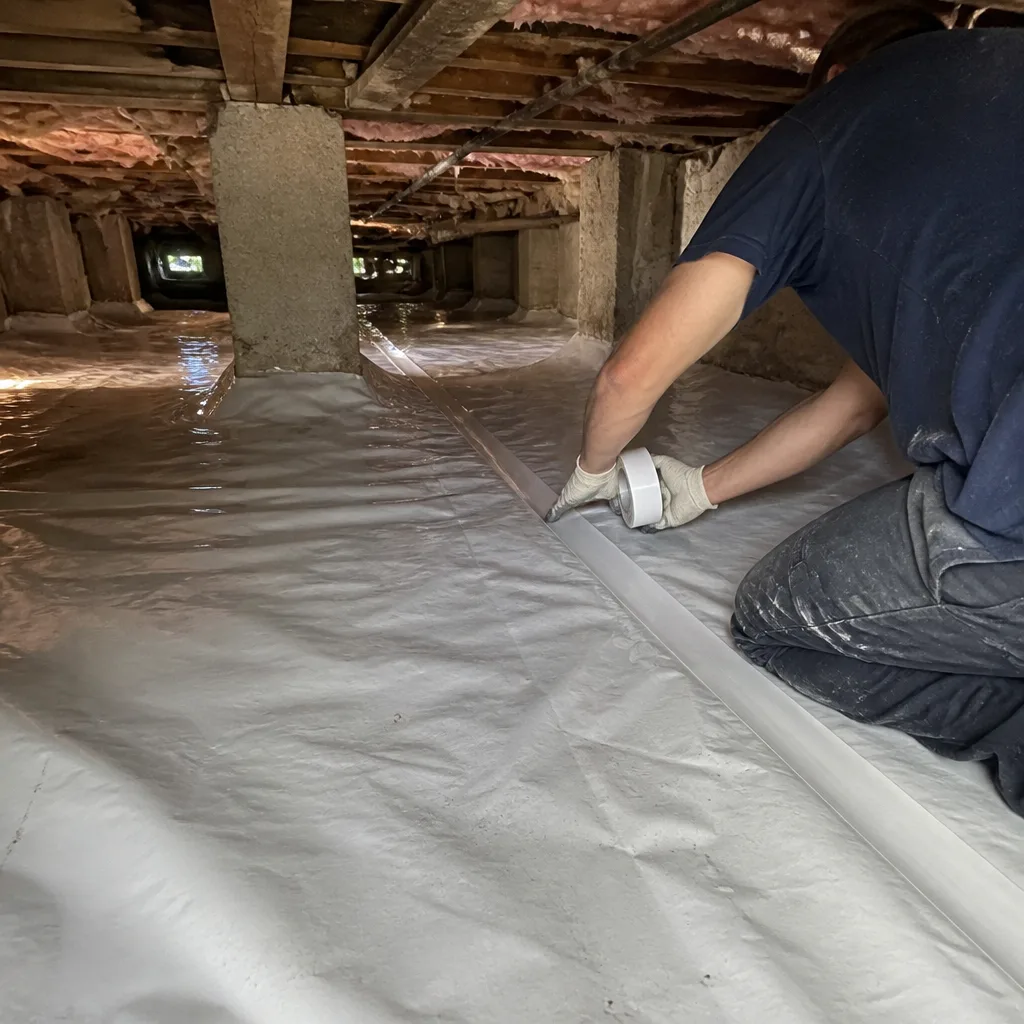
- Dark staining on rafters or roof deck near vents. In Buena Park, where morning marine layer rolls in and afternoon sun bakes the attic to 140°F, a failed or missing vapor barrier lets moisture hit the cold roof sheathing at night. The dark patches are mold feeding on condensed water. We see this most in homes north of La Palma Avenue where the attic ventilation was retrofitted without checking the barrier continuity.
- Insulation that feels damp or clumps when probed. Rockwool won’t hold water like cellulose, but it will wick it if the vapor barrier is compromised at a penetration. The mineral wool turns gray and loses its loft. If you can compress a batt with light finger pressure and it doesn’t spring back, moisture has degraded the binder.
- Peeling paint or bubbling drywall on ceiling planes below the attic. This is late-stage failure. Moisture has migrated through the assembly, bypassed the barrier at a seam or electrical penetration, and saturated the gypsum from behind. By the time you see this in a Buena Park home built between 1965 and 1985, there’s often compromised insulation in the cavity.
- Musty odor that intensifies after rain or heavy fog. The marine influence in Buena Park means attics without proper vapor management get hit twice: exterior humidity through ventilation, and interior moisture drive through ceiling leaks. A functioning vapor barrier blocks the interior source. If the smell returns every June gloom season, the barrier has a breach.
- Energy bills climbing year-over-year with no rate change. Wet or displaced insulation performs at a fraction of its rated R-value. Rockwool Comfortbatt R-23 saturated to 30% moisture content performs closer to R-12. The HVAC runs longer to compensate. We document this with blower-door numbers: a leaky, poorly barriered attic often tests above 3,500 CFM50 in a 1,600-square-foot Buena Park ranch.
Replacement Cost & What’s Included
Most Rockwool vapor barrier installations in Buena Park fall between $1,800 and $3,400. The low end covers a straightforward attic overlay: we roll out a Class II vapor retarder over existing batts, tape seams with acrylic adhesive, and seal around penetrations with compatible sealant. The high end involves full removal of degraded insulation, repair of compromised decking, installation of a smart variable-perm barrier like CertainTeed MemBrain, and re-insulation with new Rockwool to the specified R-value.
What drives the range: attic square footage (most Buena Park homes run 800-1,400 square feet of attic floor), accessibility (truss height, existing storage platforms), and whether we’re working around active knob-and-tube wiring that can’t be buried. Every job gets a Written Price Before Any Work Starts, flat and itemized, with no change orders unless you add scope. The 365-Day Done Right Promise covers the installation, and we deliver a Documented Photo Record showing seam taping, penetration sealing, and the final blower-door result if air sealing is part of the scope.
DIY or Call Us?
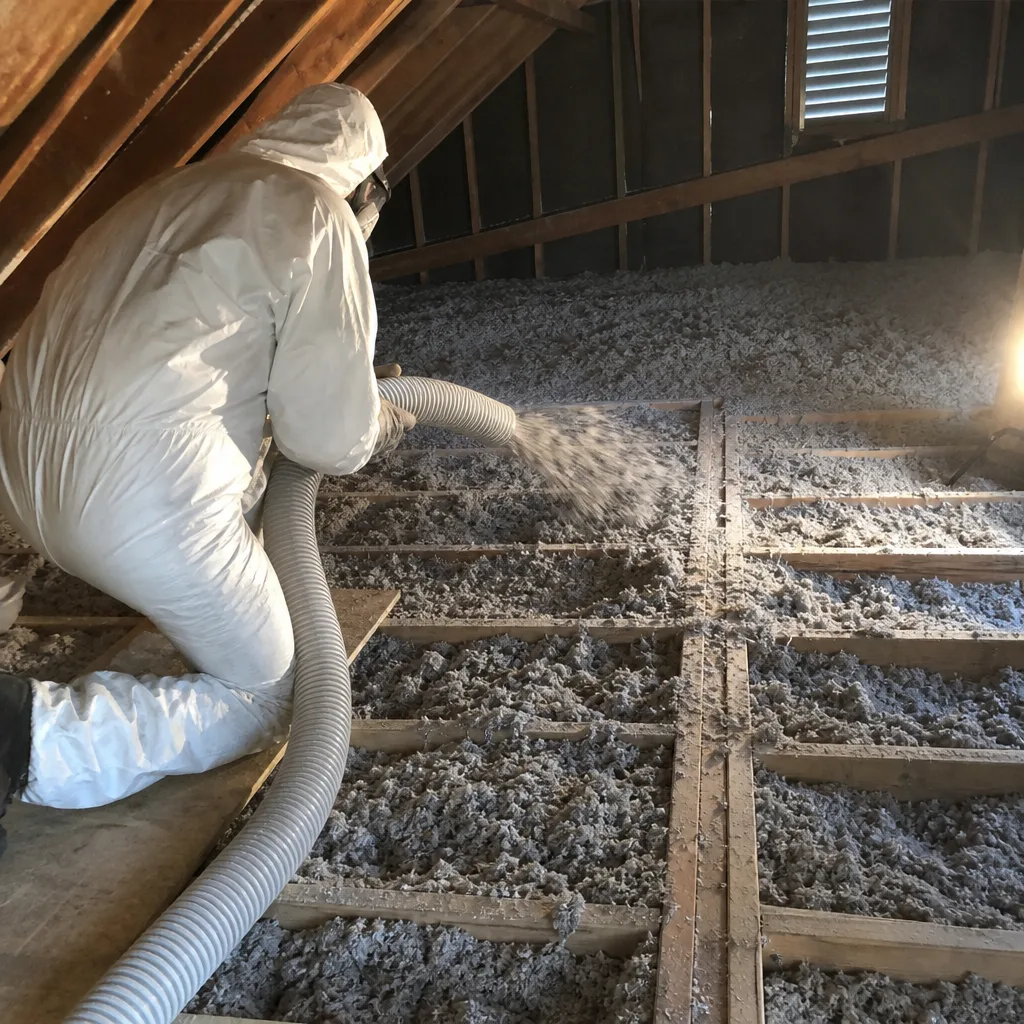
There’s a safe middle ground, and then there’s where DIY goes wrong. A homeowner can check for obvious breaches: lifted batts near can lights, disconnected bathroom vent hoses dumping into the attic, or torn polyethylene at the attic hatch. Take photos. Note the locations. That’s useful intelligence for any contractor.
Where it goes wrong: installing a vapor barrier in a vented attic without understanding whether the assembly needs one at all. In Buena Park’s climate zone, some attic configurations call for a vapor barrier; others call for air sealing and no additional retarder. Get it backwards and you create a moisture trap. Working in attics during summer carries heat-stress risk, and navigating truss bays while handling large membrane rolls leads to torn material and incomplete coverage. If you’re not comfortable with a blower-door test to verify the result, call us at (562) 418-5767. We sequence it properly: seal first, barrier second, verify with numbers.
FAQs
A properly installed vapor barrier in a Buena Park attic should last 20-30 years, but its effective lifespan depends on what happens above and below it. Roof leaks, bathroom vent failures, or subsequent electrical work that cuts the membrane without repair will compromise it far sooner. We see 10-year failures in homes where DIYers ran new romex through the attic and never resealed the barrier. Call (562) 418-5767 for an inspection if you’ve had trades in your attic since the barrier went in.
Localized repairs are possible if the damage is limited to a few square feet and the surrounding material is still pliable and well-adhered. We patch with matching membrane, tape with the manufacturer’s specified adhesive, and verify with a smoke pencil or blower-door subset test. If the barrier is brittle, extensively torn, or was installed with the wrong perm rating for the assembly, replacement is the only durable fix. We don’t charge for the assessment that determines which path makes sense.
Most Buena Park attic vapor barrier installations take one day for crews of two. A full removal, deck repair, and re-installation with new Rockwool runs two days. We arrive with the membrane on the truck, so there’s no material delay. You’ll get a text when the crew is en route, and a Documented Photo Record within 24 hours of completion.
Yes. We carry polyethylene sheeting in 6-mil and 10-mil, reinforced poly scrim, Stego Wrap Vapor Barrier for crawl space and slab-edge applications, and CertainTeed MemBrain for variable-perm assemblies. For Rockwool Comfortboard against concrete or below-grade walls, we stock compatible fluid-applied barriers when the spec calls for a seamless application. If your job requires a specific product we don’t stock, we’ll source it and hold to the Written Price Before Any Work Starts.
Ready to stop guessing whether your attic is leaking air and moisture? Call Topside Attic Insulation Buena Park at (562) 418-5767 for a free assessment. We’ll test, photograph, and give you a written price before any work starts. Seal the leaks first. Then insulate. The numbers on the report will tell you whether it worked.
Written by Wes Okafor, Owner, Topside Attic Insulation Buena Park at Topside Attic Insulation Buena Park, serving Buena Park and nearby areas.